


You can contact LEARNZ, part of CORE Education, at:
Postal Address:
PO Box 13 678,
Christchurch 8141,
New Zealand

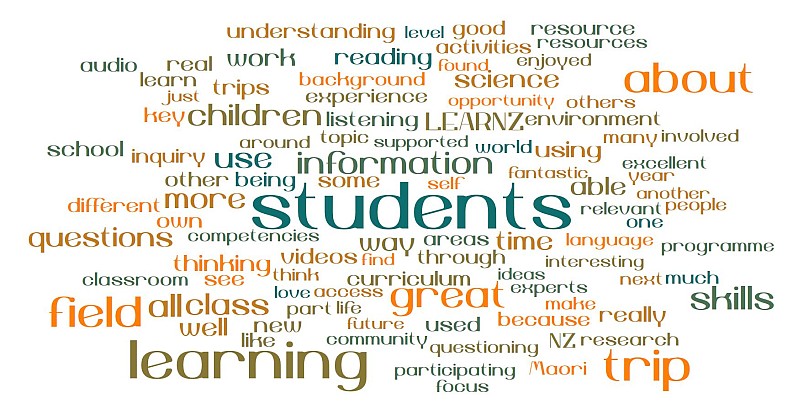
It has provided us with a valuable resource about a local area and allowed children to ask local experts some questions. The information was easy for the children to understand and the videos were very informative.
Appropriate as an introduction to harbour ecology. Made for a useful comparison to our own harbour. My Year 12 Science students were able to compare and contrast both ecological and social values of the harbours.
The material was age appropriate (particularly liked the audio links, reading the material). The participation levels at school and at home were a lot higher than usual because material was readily accessible and easy to read and understand. Audio conferences were excellent. Having the few visual photographs kept some of my less focussed kids engaged, as did the summary sheets that they had in front of them. I was surprised at just how much they picked up. It was great to be able to ask questions via the backchannel and get immediate responses - the kids loved that.
The students were very motivated and learned many new things. They have changed their attitude to estuaries in our area. They particularly enjoyed the audioconferences and twitter - audioconferences are fantastic. I like the contact with scientists and other experts. Good links with careers education and Nature of Science.
It helped my students understand about estuaries as they had no knowledge of what they were before we read about them and participated in the audioconference. Two of my students with ASD are highly excited and showing the site to their whanau, which is great. The Te Reo content and Maori perspectives in the texts and from Guest experts is also excellent and much appreciated.
It linked well with our focus on global issues and water use. It caters for a range of abilities and now that we have more devices allows students to work at their level. The live links created more reality and interest to begin with. Great stuff.
Perfect for my class level. Children were engaged and gained environmental knowledge and inspiration to care for the local area. Useful resource with great planning and layout. Catered to a variety of learning styles. A valuable learning tool that engages the children in a different way. Easy to follow lessons with realistic and interesting follow up activities.
Fitted fine with our topic, Taonga. Level 2. Suits the way I like children to learn, and the children gain so much from this sort of online learning. Caters for the range of different children/cultures/needs/learning styles. Able to view the material more than once.
Ties in so well with the guiding principles - Education for sustainability, Treaty of Waitangi etc. My Year 4 children were engaged and able to relate this field trip to our term concept of Turangawaewae. Content interesting and informative. Well presented as usual by Andrew with passion. Children with different learning styles are well catered for and my special needs children are also keen to engage in this type of online learning.
We learnt things that were directly related to our topic of kaitiakitanga and sustainability. It is great to have the background information, videos and photographs that support a NZ topic.
I used a lot of independent learning time using the background pages which promoted managing self. Also promotes community engagement, future focused thinking. It is well integrated across the curriculum and supports a range of learning types.
The kids get really engaged with what they are learning about. Because it is real the kids really respond to it. We can make links to what is happening around our area, also.
This was a brilliant trip for my class. They gained a sense of guardianship responsibility for kauri. The videos were absolutely wonderful and students loved reading the diary entries also. The field trip enabled me to transport my students to a distant place, at no cost, in order to show them first hand some real NZ based learning. Students feel they know Andrew and Egbert and are keen to do more trips.
I like that we can do the work live, or delay it to suit our needs, and either way not miss out on any of the content. It helped the children to further understand the need to value our natural environment and how easy it is for us to lose a taonga through lack of awareness or willingness to contribute. This topic also increased their cultural awareness.
My 31 mixed-ability children were completely engaged in our study. It was such an authentic context for us, as we are a silver enviroschool and we have three kauri at our school that we are learning to protect. Was great for the children to see real science in action; they were very interested in the laboratory work.
Fabulous e-learning experience! Very appropriate to our Inquiry theme of Survival. Very effectively presented. Children really enjoyed the videos and questions that were included which helped them focus on key ideas. Enthusiasm overflowed into homework! Love the idea of having background notes read so children of all levels can listen and learn. Really liked the integration of Te Reo. Can be used by a range of learning levels in a variety of ways.
The kids really enjoyed it and were well supported on the website, as they we able to navigate to find their way around to answer questions they had generated. I was able to take different aspects for different abilities in the class. We also followed up with a visit in our local area to a native bush stand.
There is so much in a LEARNZ field trip that it is possible to pick and choose what is most suitable for each class. There is so much motivating stuff to choose from for supporting reading, writing, inquiry, oral language, etc. I like the way that Te Reo is incorporated - this really supports Te Reo in my class.
The virtual field trip worked well for my mixed ability y9 science class. It engaged the students and it was relevant to the curriculum. The class enjoyed the wide range of activities. One of my students is a boarder, who has iwi connections, with the far north and kauri forests - the kauri are taonga to her iwi. She was very engaged in this unit of work.
It was easy, engaging and grabbed the students attention. Covered all areas well as we were able to use it as a hook in, therefore allowing students to explore further in areas of interest as well as share with the wider school and community.
Wonderful guided learning with experts to interact with and the real time learning makes it relevant, engaging and applicable. My class found the level appropriate (they are year 6). The delivery was manageable for all students. It fitted our theme study around NZ bush and our camp in the bush.
Was extremely motivating for our learners! Very appropriate for our "Diversity" inquiry. Supported Science: Living World but also the Key Competences of "Thinking" and "Using Language, Symbols and Text". Watch the video where our Cambridge East School students share what they learned about kauri dieback at https://vimeo.com/272665119
Love the fieldtrips as a compliment or stand alone to my programme. Students engaged, differentiated material, connections to things Maori, I could work on my own or with a group.
Easy to implement and a wide variety of resources to choose from. We made a kauri forest in our class with tracks and did some science experiments. Being hands on the students really enjoyed the new learning and have retained the information well.
Owing to time constraints with other curriculum areas, I sadly did not get an opportunity to use this wonderful resource with my class. I will be using it retrospectively however.