

Environmental guardianship in Tamatea Dusky Sound
Te manaaki i kā kaitiaki o Tamatea
Uncover unique ecosystems above and below the water, cultural heritage, and conservation efforts.
About this field trip
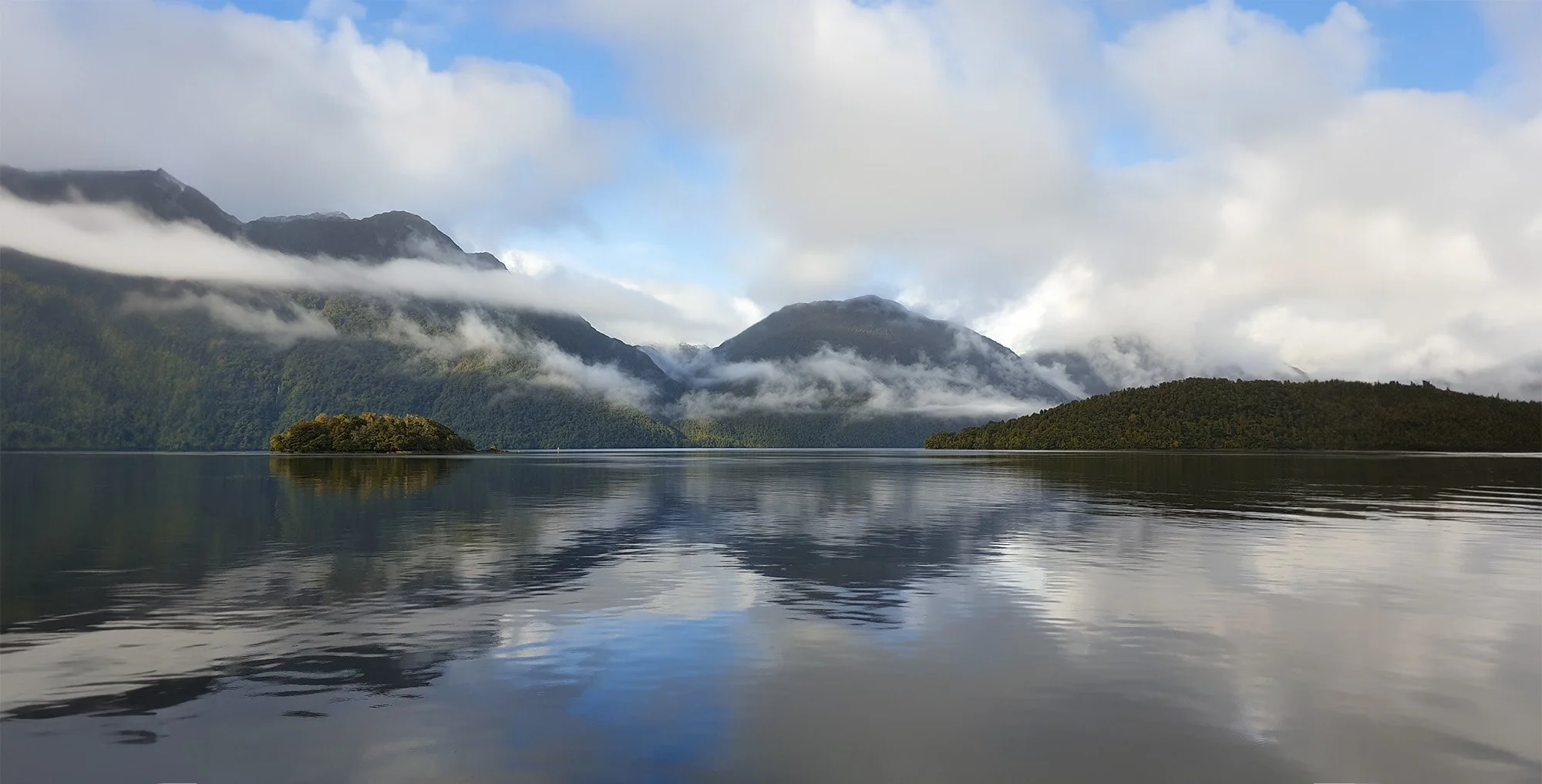
Fiordland is a huge area so people must work together to help restore it. On this field trip, we will see how parts of Tamatea Dusky Sound are being restored.
The conservation of Fiordland is a huge task that does not fall solely on Te Papa Atawhai (the Department of Conservation), but is supported by the community and businesses that work there.
The Tamatea Dusky Sound restoration plan has the ambitious goals of:
eradicating pests
re-introducing missing species
improving knowledge of species living in the area.
The project area includes Te Puaitaha Breaksea Sound, Acheron Passage, Moana Uta Wet Jacket Arm and Tamatea Dusky Sound itself, including over 700 islands.
The aim is for Tamatea Dusky Sound to be one of the most intact ecosystems on Earth, and Aotearoa New Zealand's largest ‘bio bank’ – a source of endangered native species that can be sent to pest-free locations throughout the country.
The Tamatea Dusky Sound restoration plan is a 30-year project. The area is worth protecting, with many unique plants and animals, lush native bush, and relatively few weeds.
Many of Tamatea Dusky Sound’s islands have never been invaded by the introduced pests that now plague the mainland.
On this virtual field trip, we will uncover unique ecosystems above and below the water, cultural heritage and conservation efforts. This experience provides educators and ākonga with a wealth of engaging resources, including videos, images and GIS maps to enhance your learning adventure.
Objective
Our goal is to inspire and educate ākonga across Aotearoa about the importance of preserving and restoring marine and land biodiversity in the unique Fiordland ecosystem. Through this virtual field trip, we aim to foster a deeper connection to te taiao, equipping ākonga to become active stewards of their local natural environment.
Key learning
Understand the complexity of marine and forest ecosystems and their vulnerability.
Explore the interconnectedness of forest and marine ecosystems.
Promote biosecurity awareness and action.
Embrace the importance of kaitiakitaka o te taiao and kaitiaki – environmental guardianship and guardians.
Student-led inquiry
Empower your ākonga to take charge of their learning journey. Encourage them to ask meaningful questions, explore resources, and embark on their own conservation projects. Explore how they can apply both scientific methods and mātauranga Māori to their inquiries.
Curriculum alignment
This virtual field trip aligns with The New Zealand Curriculum refresh (2022). It covers a range of learning areas, predominantly science and social sciences. Access guidance to support teaching and learning with a suggested framework, reflective questions, and activity ideas to complement the virtual field trip and align with curriculum goals.
Educator guide
This curriculum guide supports teachers in delivering an integrated unit of learning across curriculum areas, using the Tamatea Dusky Sounds virtual field trip as a key learning experience.
The guide will assist ākonga to explore the interconnectedness between people and the environment, particularly a fragile environment like Tamatea Dusky Sounds. It also aims to increase awareness of the role of organisations such as the Department of Conservation, local iwi, environmentalists, and business owners in land and sea management in Aotearoa.
Curriculum highlights
This virtual field trip aligns with Te Mātaiaho, the refreshed New Zealand Curriculum (2022). It is designed to integrate key learning areas and priorities by offering a rich educational experience in biodiversity, conservation, social sciences, and science.
Curriculum flexibility
Our field trips include cross-curricular learning experiences which can be adapted to different learning areas and progressions. You can develop your teaching approach to suit ākonga interests and needs.
Learning areas and achievement objectives
-
Explore marine and forest ecosystems, biodiversity, predator and pest removal, and the impact of human activity on fragile environments. Foster scientific inquiry and analysis skills.
For example: The Environmental guardianship in Tamatea Dusky Sound virtual field trip can effectively support learning outcomes in the strands Nature of Science and Living World, and Planet Earth and Beyond, (predominantly in years 4-8) of the 2007 New Zealand Science learning area.
Understanding ecosystems: The field trip allows ākonga to explore marine and forest ecosystems in Tamatea Dusky Sound. Ākonga will gain an understanding of the complex interactions between living organisms and their environment.
Biodiversity conservation: Ākonga can learn about biodiversity and the importance of conservation. They will understand how biodiversity is essential for ecosystem health and stability.
Scientific inquiry skills: The field trip can foster scientific inquiry and analysis skills. Ākonga can develop their ability to ask questions, collect data, and make observations in their local environment.
-
Examine the societal aspects of biodiversity conservation, including the role of organisations such as the Department of Conservation, local iwi, environmentalists, and business owners in land and sea management. Encourage ākonga to explore social and cultural dimensions of environmental stewardship.
For example: The Environmental guardianship in Tamatea Dusky Sound virtual field trip can effectively support the progress outcomes in Phase 2 (Years 4-6) of the refreshed New Zealand Social Sciences learning area, specifically in terms of the Understand, Know, and Do (UKD) framework.

This field trip aligns with both SDG 14: Life Below Water and SDG 15: Life on Land. It emphasises the significance of marine and terrestrial biodiversity, promoting awareness of conservation efforts in Tamatea Dusky Sound. By fostering understanding of the interconnectedness between land and marine ecosystems, it contributes to the broader global goals of preserving life below water and protecting life on land for sustainable development.
Goal 15: Life on land: Protect, restore and promote sustainable use of terrestrial ecosystems, sustainably manage forests, combat desertification, and halt and reverse land degradation and halt biodiversity loss.
Goal 14: Life below water: To conserve and sustainably use the world's oceans, seas and marine resources.
Discover more
Select a topic, image or Read more link for background information, images, narrations, and Māori kupu | keywords for each topic.
Look through the trip glossary.
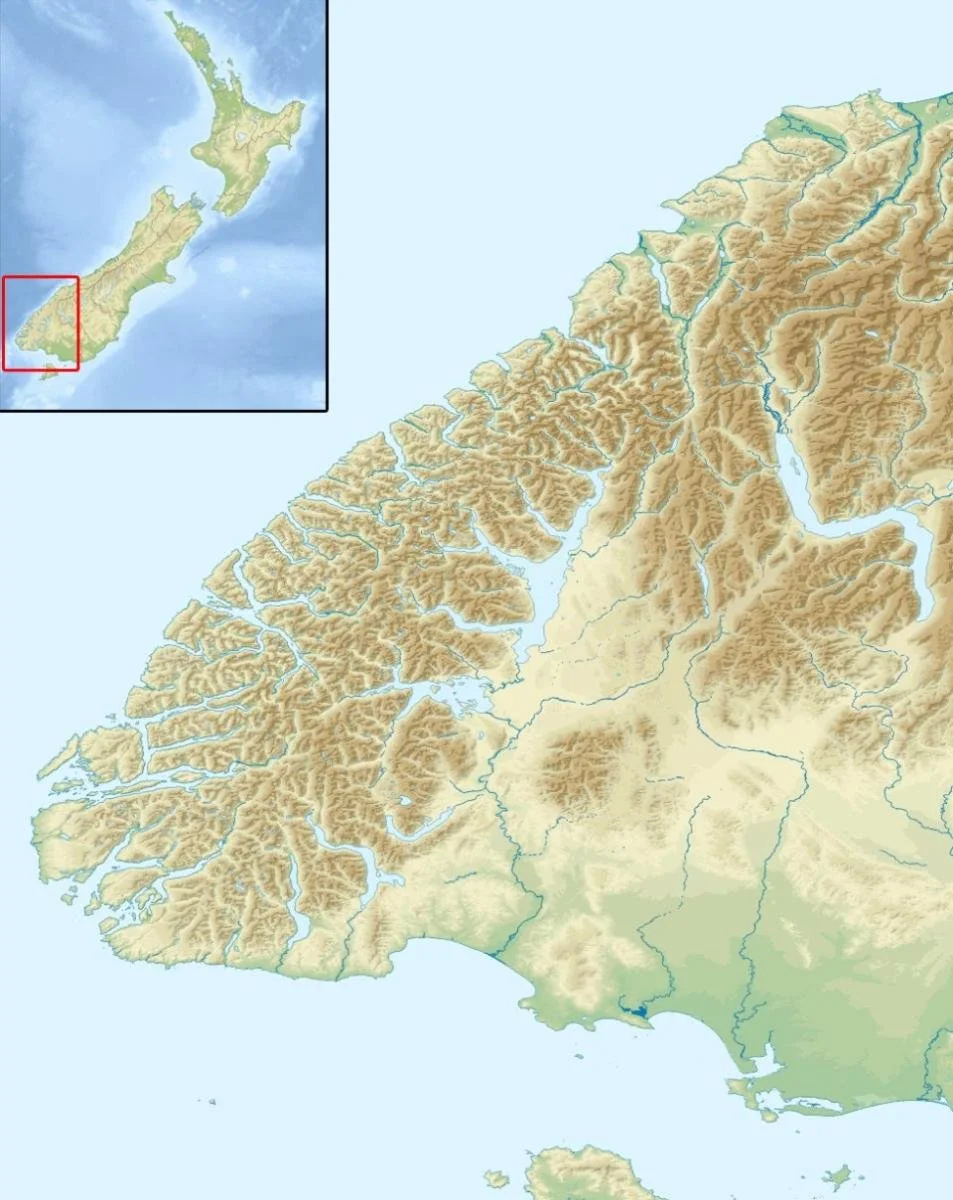
Fiordland’s importance
Fiordland is a region in the south-west corner of Te Wai Pounamu the South Island. The fiords that give the area its name are troughs carved by glaciers about 20,000 years ago.
Connect with field trip experts
Insights into people and their careers, and replay the Q&A podcasts
Meet Maria from Pure Salt
Meet Seán from Pure Salt
Meet the 'ākonga crew'
Meet Rusty from Pure Salt
Meet Jo from Te Papa Atawhai Department of Conservation
Meet Rebecca from Fiordland Marine Guardians
Meet Jessi from the Predator Free New Zealand Trust
Meet Fleur - chef and pioneering restaurateur
Explore the field trip videos
Join our field trip experts as we visit new places and learn new things
Journey to Tamatea
Get a view from inside the helicopter on route to Shark Cove in Tamatea Dusky Sound to board Flightless, the waka for this Environmental Guardianship hīkoi.
Reducing pests in Tamatea
Pest eradication is a key tool for ensuring our taoka species living in Tamatea Dusky Sound continue to thrive and grow in numbers.
Why is predator trapping so useful?
What different methods did you see that are used to identify predator species?
Fiordland's unique marine environment
Fiordland's connected forest and marine ecosystems create an underwater habitat like no other in Aotearoa. Here you will find creatures usually living in places only submarines and ROVs can reach.
How are deep-sea creatures able to live in shallow water in Fiordland?
In what way is the land connected with the sea?
Exploring Moana Uta marine reserve
Moana Uta has been a marine reserve since 2005. It is an underwater ecosystem with many connections to the land and forest around it.
Describe the energy exchange between the forest and the sea in Moana Uta.
What are the benefits of marine reserves?
Removing Undaria from Tamatea
Undaria is an exotic seaweed species that threatens parts of the undersea environment in Tamatea Dusky Sound. Find out why Undaria is such a threat and find out about the work being done to get rid of it.
How can you identify Undaria?
Why is Undaria a threat to the Fiordland marine environment?
Fishing sustainably
When you catch fish on board Pure Salt's 'Flightless', there are some particular methods you learn about and use to ensure maximum sustainability.
What are some of the fishing methods used on board Flightless?
How might you use the whole fish rather than just the fillets?
Exploring predator-free Pukenui Anchor Island
Pukenui Anchor Island is predator-free and home to a range of threatened bird species, including kākāpō. Jo from Te Papa Atawhai Department of Conservation talks about why sanctuaries like Pukenui Anchor Island are so important for the future of our special biodiversity.
What is meant by the term 'biobank'?
What is done to ensure Pukenui Anchor Island remains pest-free?
Uses for seaweed
New Zealand chef Fleur Sullivan talks passionately about culinary uses of seaweed.
What are some of the different uses for seaweed described by Fleur?
Can you identify any products at home that contain seaweed?
Reflecting on a week in Tamatea Dusky Sound
The ākonga crew talk about their field trip highlights and share new conservation goals.
Do you have any new conservation goals?
How has this virtual field trip inspired you to become an environmental guardian near your place?
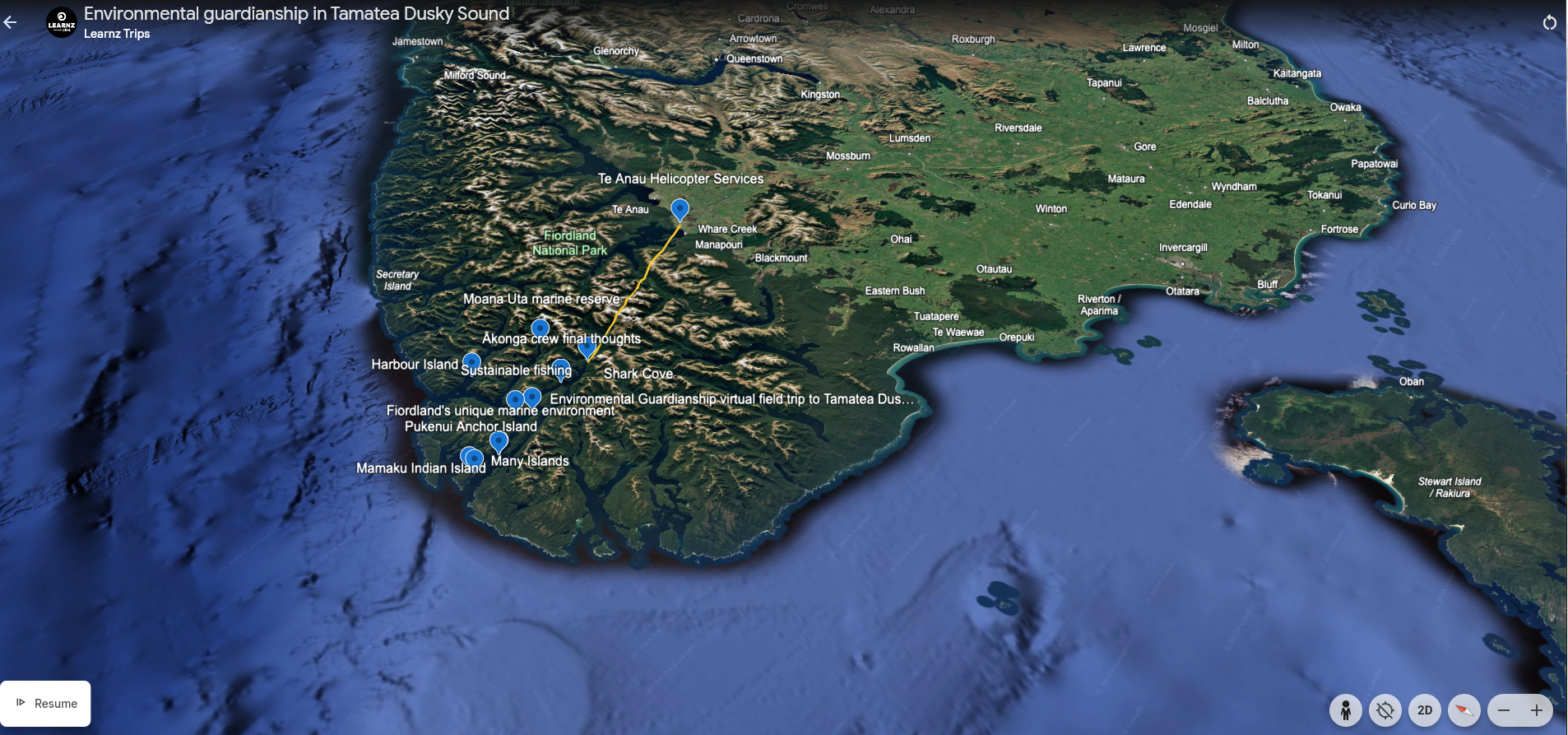
Take the Google Earth tour
Take the Google Earth for Web Tour
A virtual tour of the field trip with GIS mapping, 3D locations, 360° panoramic images, videos, and further information.
Web conference
Replay the field trip web conference
Listen to a recording of the live web conference with expert answers from Maria from Pure Salt and questions from Te Anau School, Rooms 1 and 3.
Resources and links
Pure Salt - Conservation
Pure Salt has a vision for Dusky Sound to be one of the most intact ecosystems on Earth, and New Zealand's largest ‘biobank’ – a source of endangered native species that can be sent to pest-free locations throughout the country.
Video experiences in Fiordland
Short video clips from New Zealand Geographic featuring a selection of Fiordland experiences.
Our Big Blue Back Yard - Fiordland
A 45-minute NZNH documentary on the natural features of Fiordland.
Story: Kaitiakitanga – guardianship and conservation
From Te Ara: Encyclopedia of New Zealand.
Department of Conservation (DOC) - Biodiversity: Nature
Explore DOC's resources on biodiversity and conservation efforts in New Zealand, considering both scientific and societal dimensions.
Tamatea/Dusky Sound restoration project (DOC)
Learn about ongoing conservation projects and initiatives in Tamatea Dusky Sound, including historical and societal context.
Predator Free NZ - Kids and schools
An introduction to where to begin and how to get the kids excited and proactive about conservation.
Schools toolkit
A rich assortment of conservation learning resources from Predator Free NZ.
Ministry for the environment - educational resources
Educational resources to help students, teachers and communities contribute to the future well-being of the environment.
Forest and Bird
The Royal Forest and Bird Protection Society of New Zealand is New Zealand's largest national conservation organisation
Glossary
Bio bank - A special place where scientists keep samples of plants, seeds or even cells from animals. These samples are like backups for the natural world. If something happens to a plant or animal and it becomes rare or endangered, scientists can use the samples from the bio bank to help grow more of them and keep them safe.
Biodiversity - The variety of plants, animals and other living creatures in the world.
Conservation - Conservation is all about taking care of our planet and the plants and animals that live on it.
Continental shelf - The wide, shallow part of the ocean near the edges of continents. It starts at the shore and stretches out into the sea for a little while before dropping down into deeper waters.
Endemic - If an animal or plant is endemic, it is found only in that place or country.
Environment - Everything around us that we can see, touch, hear, and smell! It includes things like trees, plants, animals, rivers, oceans, mountains, and even the air we breathe.
Fiord - A long, narrow waterway with steep cliffs on both sides. Fiords are formed when glaciers carve out the land, and when the ice melts, the area fills with seawater.
Glacier - A glacier is like a huge river made of ice. As it moves, it scrapes and shapes the land underneath, creating valleys and mountains.
Habitat - A place in nature where living things, like birds, insects and trees can find everything they need to survive.
Interconnectedness - Interconnectedness is like a big web or puzzle where everything is connected to everything else. It's when different things, like plants, animals, and even people, rely on each other to live and grow.
Introduced - Something that wasn't originally from a certain place but was brought there by people.
Invasive species - A plant, animal or bug that doesn't belong in a certain area but somehow got there. Once it arrives, it spreads quickly and takes over, like a weed in a garden. Invasive species can cause big problems for native plants and animals because they might eat all the food, take up all the space, or even push native species out of their homes.
Leaf litter - All the dead leaves that cover the ground in forests and other natural places.
Mammal - Mammals include humans and all other animals that are warm-blooded vertebrates (vertebrates have backbones) with hair. They feed their young with milk and have a more well-developed brain than other types of animals.
Marine ecosystem - a special community of living organisms that exists in the ocean or other saltwater environments. Just as on land, marine ecosystems include plants, animals, and microorganisms that interact with each other and their surroundings.
Marine reserve - A special underwater park where sea creatures get to live and play without being disturbed. It's a protected area in the ocean where people aren't allowed to fish or take things from the sea.
National park - A special area of land set aside by the government to protect and preserve the plants, animals, and landscapes that make Aotearoa New Zealand so unique.
Native species - Species that have been present for millions of years or have arrived since but without human assistance and survived.
Nutrients - Nutrients help living things grow. They're tiny bits of stuff found in food, soil and water that plants and animals, including humans, need to stay healthy.
Pests - Plants or animals that cause problems for people or other plants and animals.
Predator - An animal that hunts and kills other animals for food.
Restoration - Restoration is like giving nature a big helping hand. It's when people work together to fix up areas of nature that might have been damaged.
Sanctuary - A special place where animals can live without having to worry about being hunted or bothered.
Sustainable - Doing something in a way that keeps it going for a long time without using up all the resources or hurting the environment.
Translocation - When people help move animals from one place to another, where they'll be happier and safer.
Threatened - Threatened species have the greatest risk of extinction.
U-shaped valley - A valley in the shape of a U, characterised by steep sides and a wide, flat bottom. These valleys are formed when giant, icy rivers called glaciers slide across the land, carving and shaping it as they go. When glaciers melt, they leave behind these special valleys.
World heritage area - A super special place on Earth that's extra important and needs extra care. It's chosen by people from all around the world because it has something amazing or unique, like ancient ruins, breathtaking landscapes, or rare animals.