Carving pounamu is a skilled and respected art form. Master carvers, known as tohunga whakairo, use tools and water to carefully shape the stone. It takes time and patience, as pounamu is extremely hard.
Carving pounamu isn't just about creating something beautiful – it’s also about connections and honouring ancestors. Many carvers learn the meanings behind each shape and design, and sometimes people request carvings that reflect their own whakapapa or journey in life.
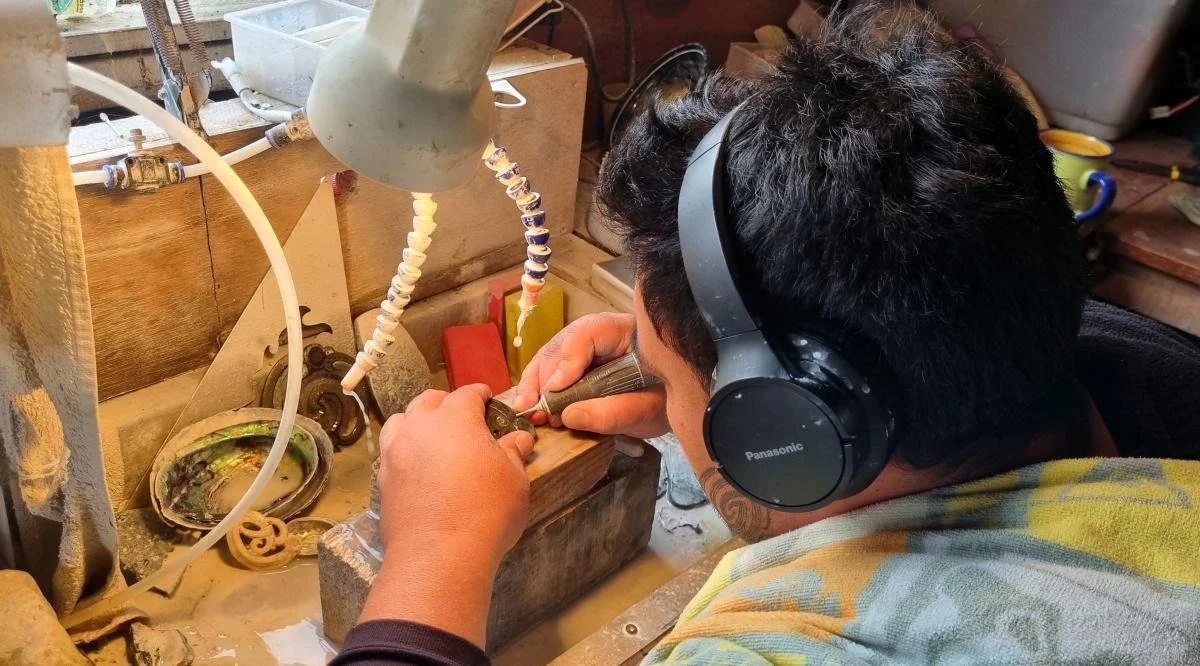
Master carvers, known as tohunga whakairo, use tools and water to carefully shape the stone. Image: LEARNZ.
Old versus new carving methods
Traditional carving
Made completely by hand using stone, wood, or bone tools.
Carving took many weeks or months.
Tools and stone were shaped using sand and water.
Only certain people (tohunga whakairo) were trained to work with pounamu.
Strong focus on spiritual connection, karakia, and whakapapa.
Modern carving
Uses modern tools like diamond-tipped grinders, drills, and rotary machines.
Carving is much faster, though still requires patience and skill.
Machines can cut and polish pounamu more precisely.
Many carvers now learn through schools, workshops, or mentorship, both Māori and non-Māori.
Tikanga is still respected today – many carvers begin their work with karakia and work only with pounamu gifted or sourced respectfully.
Even with new tools and methods, the spirit of pounamu carving hasn’t changed. It’s still about creating something meaningful, beautiful, and respectful of the past.
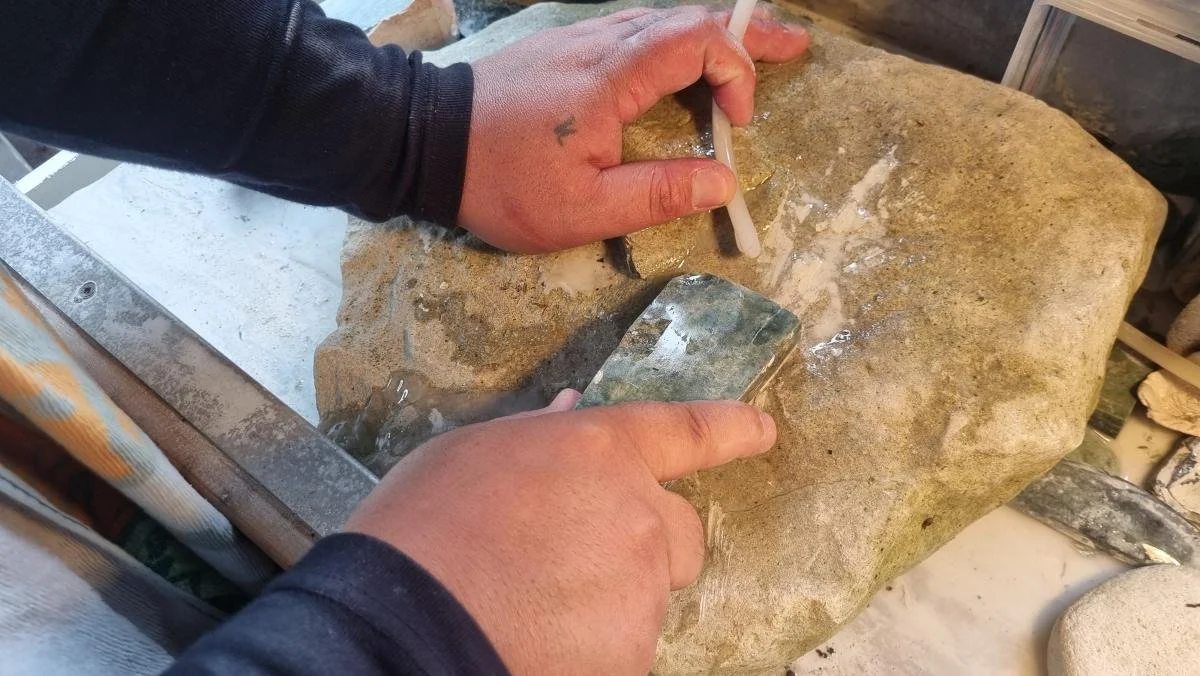
Traditional carving was done completely by hand using stone, wood, or bone tools and took a long time. Image: LEARNZ.
Pounamu shapes and their meanings
Each shape carved from pounamu has its own special meaning. Here are some of the most well known:
Koru – This spiral shape is like the curled frond of a silver fern. It stands for new life, growth, peace, and strength.
Roimata – Meaning tear, these are shaped like a drop of water. It represents sadness, healing, and a strong link to the land.
Rau kūmara – Shows the bond between two people. It represents friendship, love, and loyalty.
Toki (adze) – These take the shape of a traditional adze. Based on ancient tools, it shows strength, wisdom, and leadership.
Manaia – A figure with the head of a bird, a human body, and tail of a fish. It’s a guardian against evil and protector of the natural world.
Matau – These are based on traditional fishing hooks. A symbol of safe travel, strength, and connection to the sea.
Hei Tiki – A small human-like figure. It’s a good luck charm and symbol of fertility and protection.
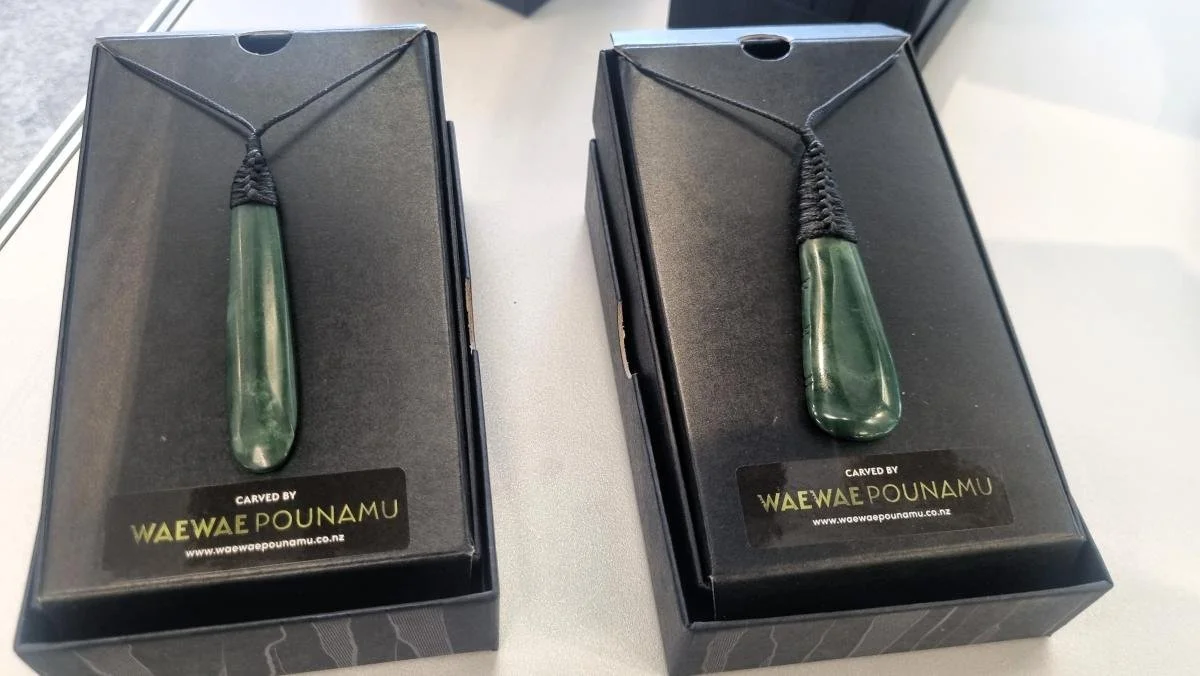
Roimata, meaning tear, represents sadness, healing, and a strong link to the land. Image: LEARNZ.