Te āhuarangi hurihuri me ngā awa kōpaka

Crevasses on Haupapa Tasman Glacier. Image: LEARNZ.
In Aotearoa, glaciers are incredibly special. These icy giants are an important link in our environment ki uta ki tai, from mountains to sea. Glaciers are a water source, storing fresh water and slowly melting to feed our rivers.
But our glaciers are in trouble, and it’s all because the planet is warming up.
Nature’s thermometers and time machines
Glaciers are like nature's thermometers—when the climate warms, they shrink. They are also like time machines. Deep inside the old ice, some clues tell scientists what the weather was like hundreds of years ago.
Because our planet is getting warmer due to climate change, New Zealand’s glaciers are melting fast. In fact, between 1978 and 2020, more than one-third of our glacial ice vanished. As the ice melts, the snowline (the line on a mountain where snow stays all year) is moving higher and higher up the peaks. Recent work shows the snowline rise is accelerating.
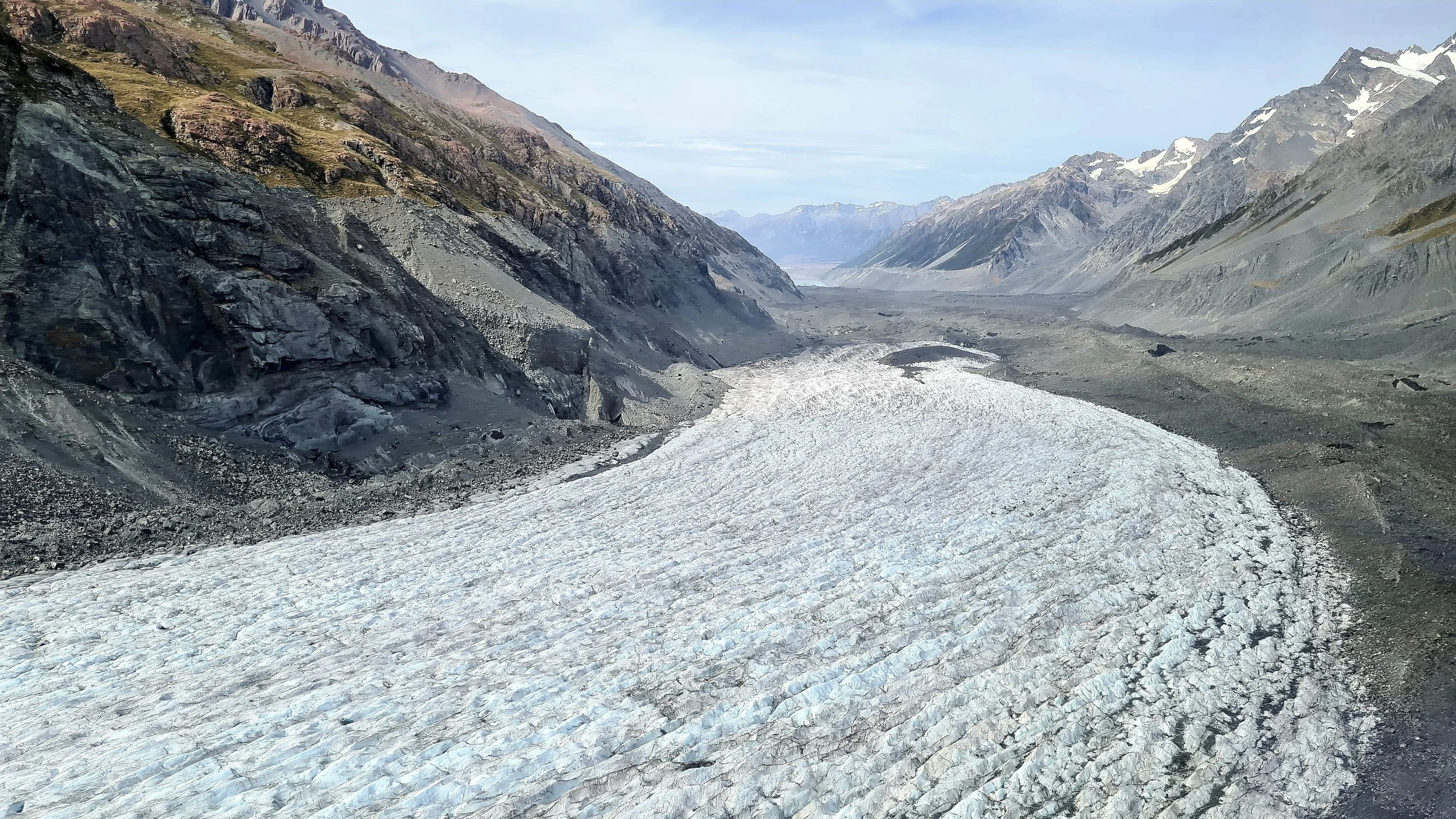
Looking down towards the terminus of Haupapa Tasman Glacier. Image: LEARNZ.
The trickle-down effect on wildlife
When a glacier melts, it doesn't just change the mountain—it changes everything downstream. River water warms, flow changes, and lots of mud and dirt (sediment) washes into streams. This makes life very hard for the local animals:
The Upstream Invasions: Animals that love the cold are losing their icy homes. To make things worse, animals such as introduced predators from the warmer, lower parts of the mountain are now moving up into the high peaks, preying on native species.
The Hutton’s Shearwater | Kaikōura Tītī: This amazing taonga, a treasured species, is the only seabird in the world that builds its nests high up in the mountains. As the snow disappears and pests move up the mountain, these special birds are losing their safe nesting spots.
The Rock Wren: This tiny alpine bird is also threatened by a growing number of introduced predators invading alpine areas.
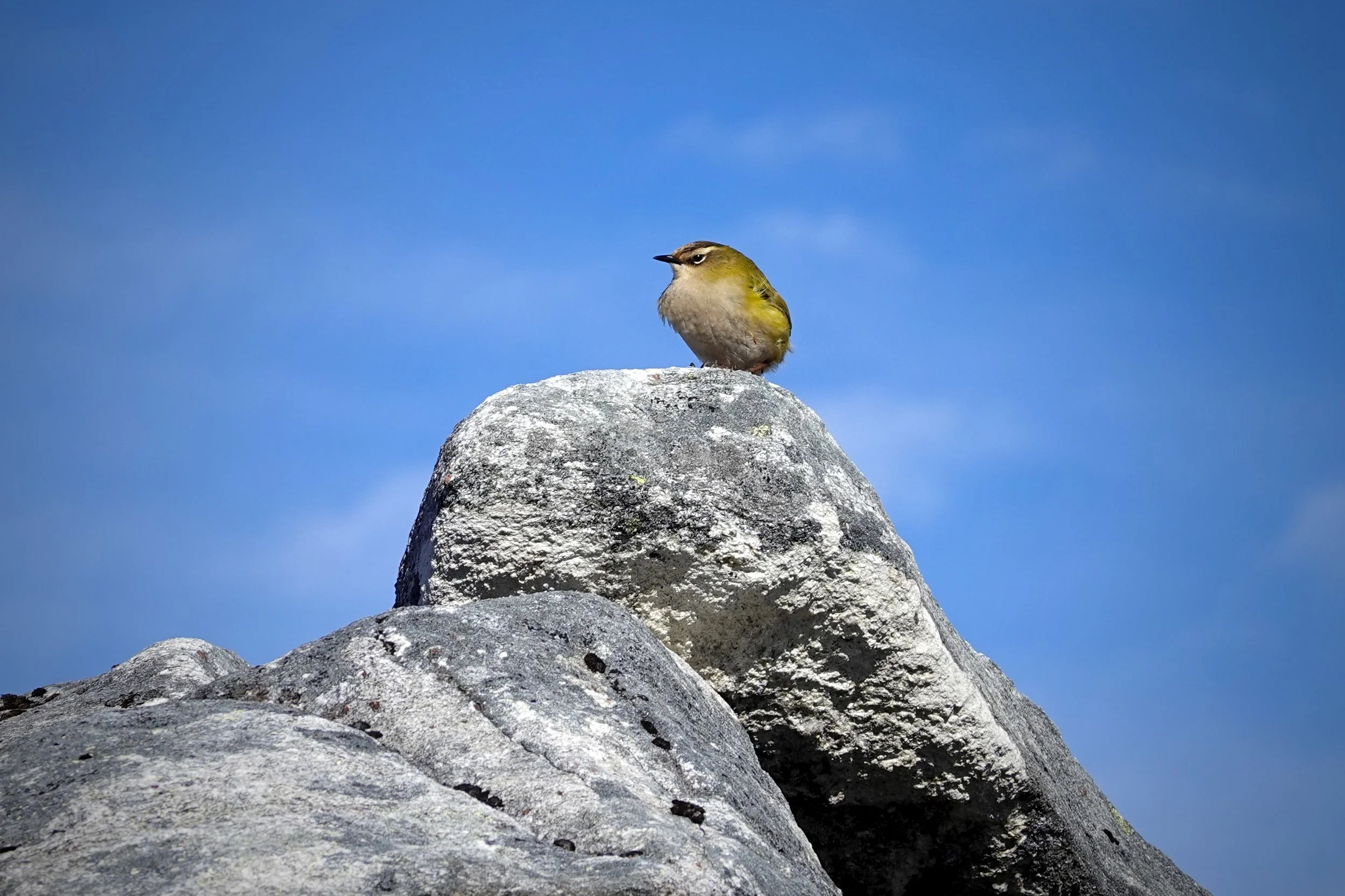
Pīwauwau, the New Zealand Rock Wren. Image: LEARNZ.
What happens in the rivers?
Changes in the mountains flow right down into our lakes and streams. Tiny bugs like mayflies, which need cool, clean water to survive, are losing their habitats.
If the mayflies disappear, it creates a chain reaction. Larger animals that eat those bugs will go hungry, including:
Kōura - freshwater crayfish
Tuna - eels
Īnanga - whitebait
Protecting Mahinga Kai
For Māori, mahinga kai is the traditional practice of gathering food and natural resources from the land and water. It connects people with nature and passes down knowledge from grandparents to grandchildren.
As glaciers melt and fish or birds disappear, these important traditions are threatened. The places that once provided plenty of food for whānau can no longer do so.
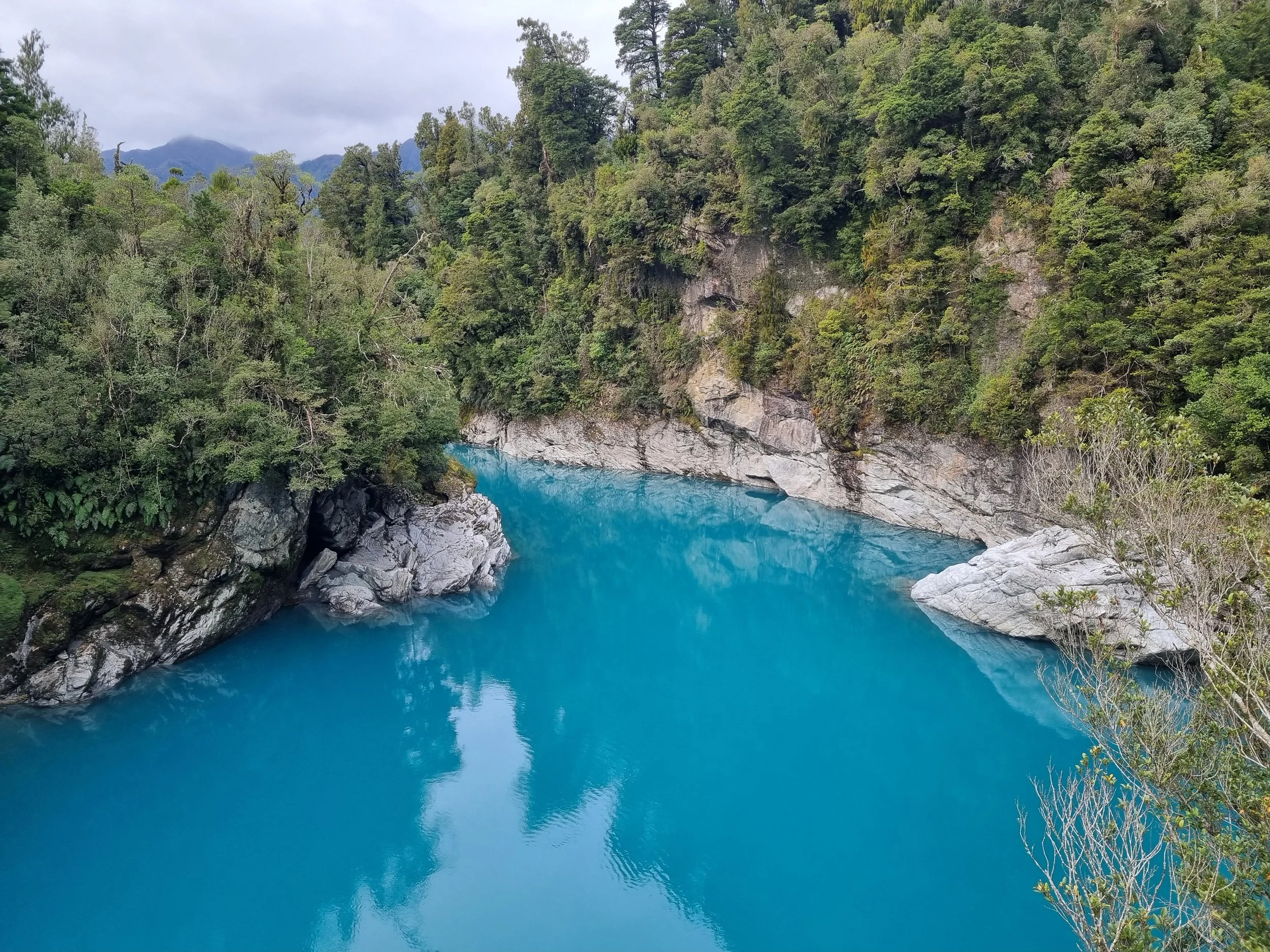
Hokitika River is fed by glacial melt and contains rock flour, which gives the river its bright turquoise colour. Image: LEARNZ.
What can we do?
The main reason the Earth is warming up is that humans are releasing too many greenhouse gases (like pollution from cars and factories) into the air.
The good news is that we can all work together to help slow down the melting. Here are four things you can try at home:
Choose Green Wheels: Walk, ride your bike, scooter, or take a bus or train instead of riding in a car.
Eat Local: Ask your whānau to buy food grown nearby so trucks don't have to drive long distances to bring it to you.
Ditch the Disposable: Use reusable water bottles, lunchbox containers, and shopping bags instead of single-use plastic.
Be a Power Saver: Turn off the lights, TV, and computer when you leave a room to save electricity.