Restoring Habitats
Because Aotearoa is an isolated island nation, many of our native animals live nowhere else on Earth. These unique creatures are endemic. Because they evolved over millions of years with almost no land mammals around, many endemic plants and animals never developed natural defences or escape tactics to deal with herbivores (plant-eaters) like deer or predators like stoats and possums.
Across the Southern Lakes region, our precious native species face serious threats from pest animals, disease, climate change, and human impact.
That’s why the Southern Lakes Sanctuary is working to restore habitats, protect taonga species, and give native wildlife a chance to thrive.
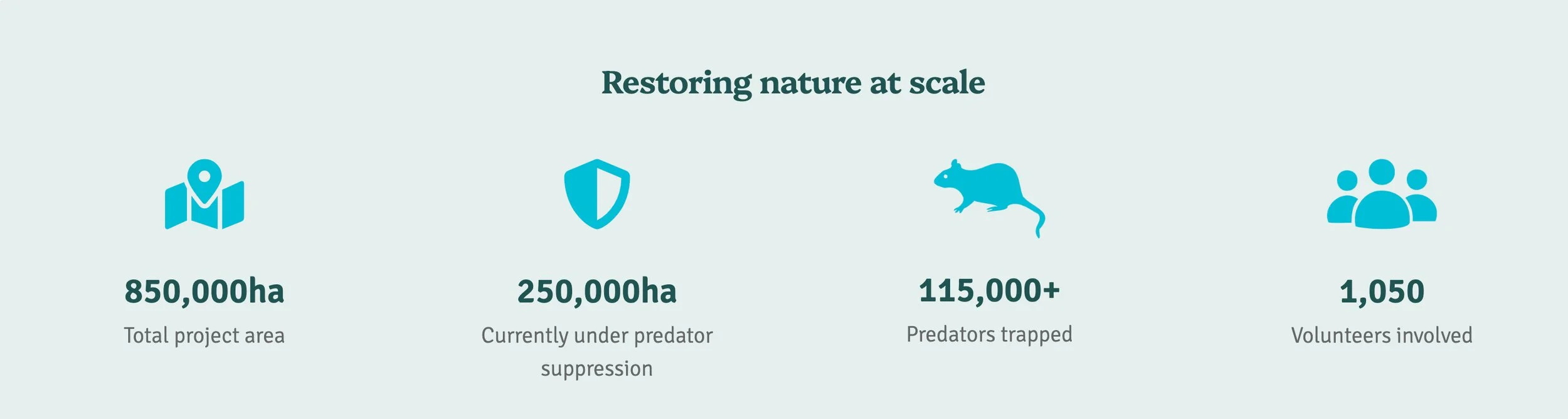
Landscape-scale predator control covers large areas. Image: SLS.
The Threat: Introduced Predators
Ground-nesting birds like whio | blue duck and takahē are targets for introduced mammalian predators. Their eggs and chicks are frequently destroyed before they ever grow up. Beyond hunting native animals, these pests also steal food sources, ruin habitats, and damage entire ecosystems.
The main culprits include: feral cats, possums, rats, hedgehogs and mustelids.
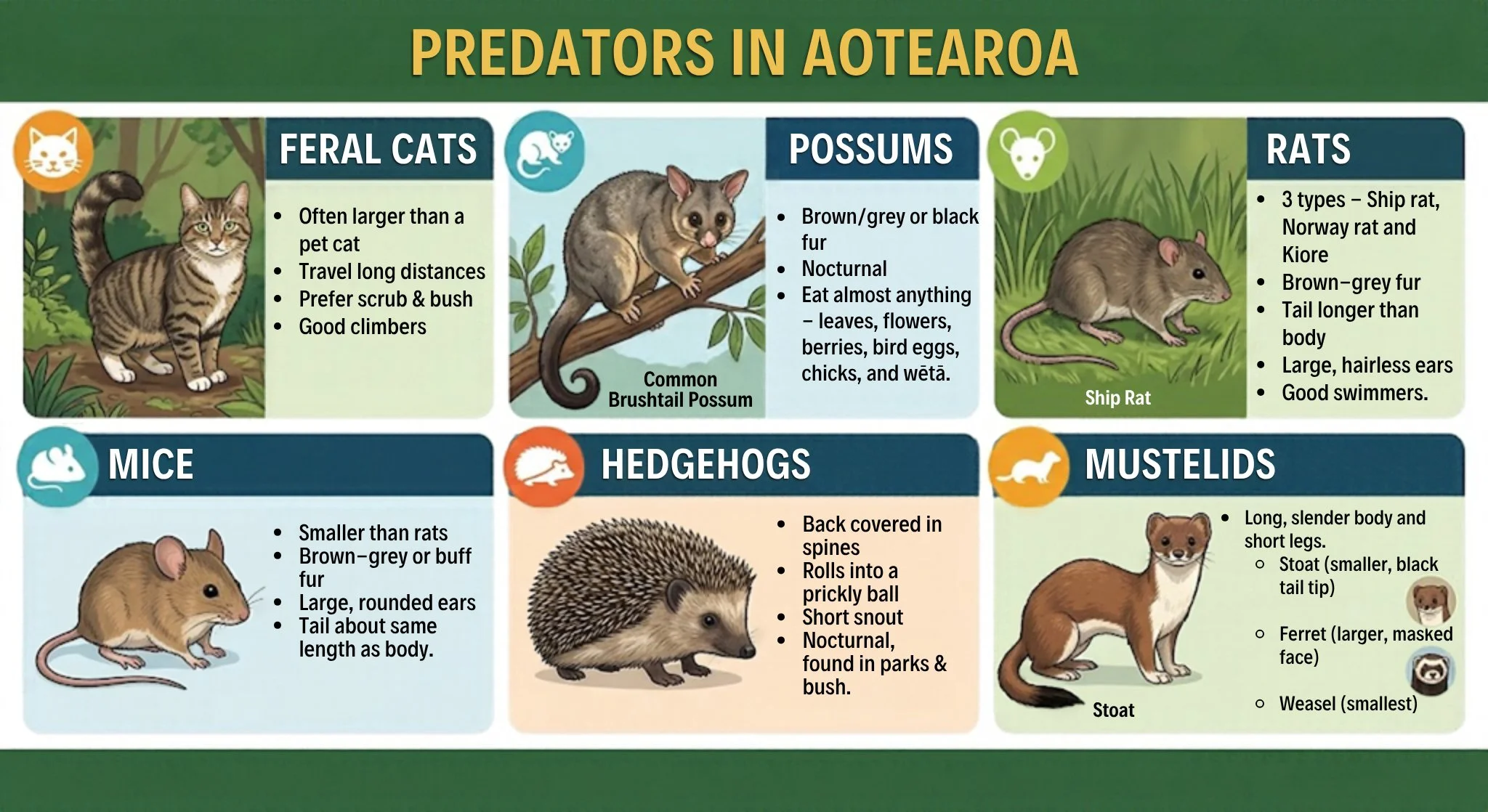
Image: LEARNZ.
Feral Cats
These aren't your typical house pets. Feral cats grow much larger than domestic cats and can travel huge distances. Scientists tracked one feral cat in the South Island high country that covered almost 6 kilometres in a single night! They can even survive above 2,000 metres in the mountains, wiping out native birds, bats, frogs, lizards, and wētā.
How you can help: Pet owners should microchip, desex, and keep domestic cats indoors as much as possible.
Possums
Possums are everywhere in New Zealand, and they eat almost anything—leaves, flowers, berries, bird eggs, chicks, and wētā. They nest in tree hollows, stealing the nesting spots of some native birds. On top of damaging forests, they spread bovine tuberculosis to livestock, costing farmers millions.
Rats
There are three main rat species in Aotearoa, and none of them belongs here:
Ship Rats: Super agile tree-climbers that raid nests high in the canopy. They are responsible for pushing several native bird species to extinction.
Norway Rats: Strong swimmers that can cross up to a kilometre of water. They hunt ground-nesting birds and their eggs.
Kiore: Arrived with early Māori navigators. Now outcompeted by ships and Norway rats, they survive mainly on remote offshore islands and parts of Fiordland.
Hedgehogs
They look cute, but hedgehogs are a disaster for native biodiversity. Originally brought over to remind European settlers of home, they have massive appetites for native insects, lizards, and the eggs or chicks of riverbed birds like banded dotterels and black-fronted terns.
Mustelids (Stoats, Ferrets, and Weasels)
Mustelids are elite, relentless hunting machines. Introduced to control rabbits, they quickly switched to easy native prey. Stoats can take down animals much larger than themselves, can cover 70 km in two weeks, swim over a kilometre to reach sanctuary islands, and reproduce fast.
Mice
Mice eat native insects, lizards, and eggs. During "mast years"—when trees drop massive amounts of seeds—mouse populations explode. This fuels a rise in predators like stoats, which feast on mice; once mice are less abundant, they turn to native birds, causing population crashes.
Fighting back with tech and strategy
The Southern Lakes Sanctuary focuses its trapping efforts across seven main Project Hubs. The goal is to expand these hubs and connect them with safe "ecological corridors" so native animals can travel across a protected landscape.
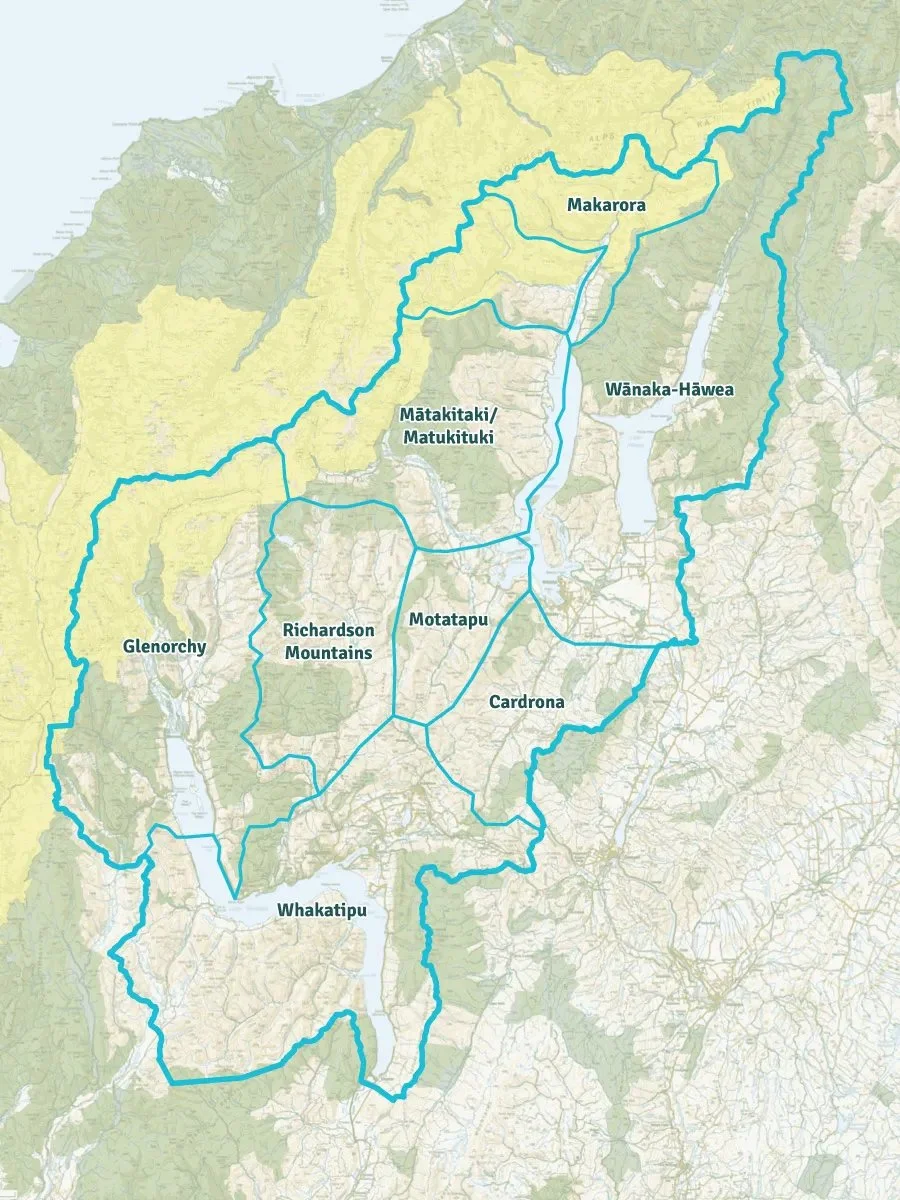
The seven project hubs within Southern Lakes Sanctuary. Image: SLS.
To clear out these pests, conservationists are using high-tech tools:
eDNA (Environmental DNA): Animals constantly shed tiny bits of skin, hair, or cells into water and soil. Scientists sample the environment and read this "genetic dust" to figure out exactly what species are hiding nearby without having to catch them.
Smart Traps & AI: Self-resetting traps and AI-powered cameras recognise invasive species and target them automatically in hard-to-reach backcountry areas. These traps can be monitored remotely through an integrated management system/website portal.
Acoustic Monitoring: Instead of sitting in the bush doing manual 5-minute bird counts and surveys, automatic audio recorders record forest sounds for weeks. AI algorithms then analyse the audio, identifying specific bird species—and even individual birds—by their calls. This helps experts track how bird numbers bounce back after predator control.
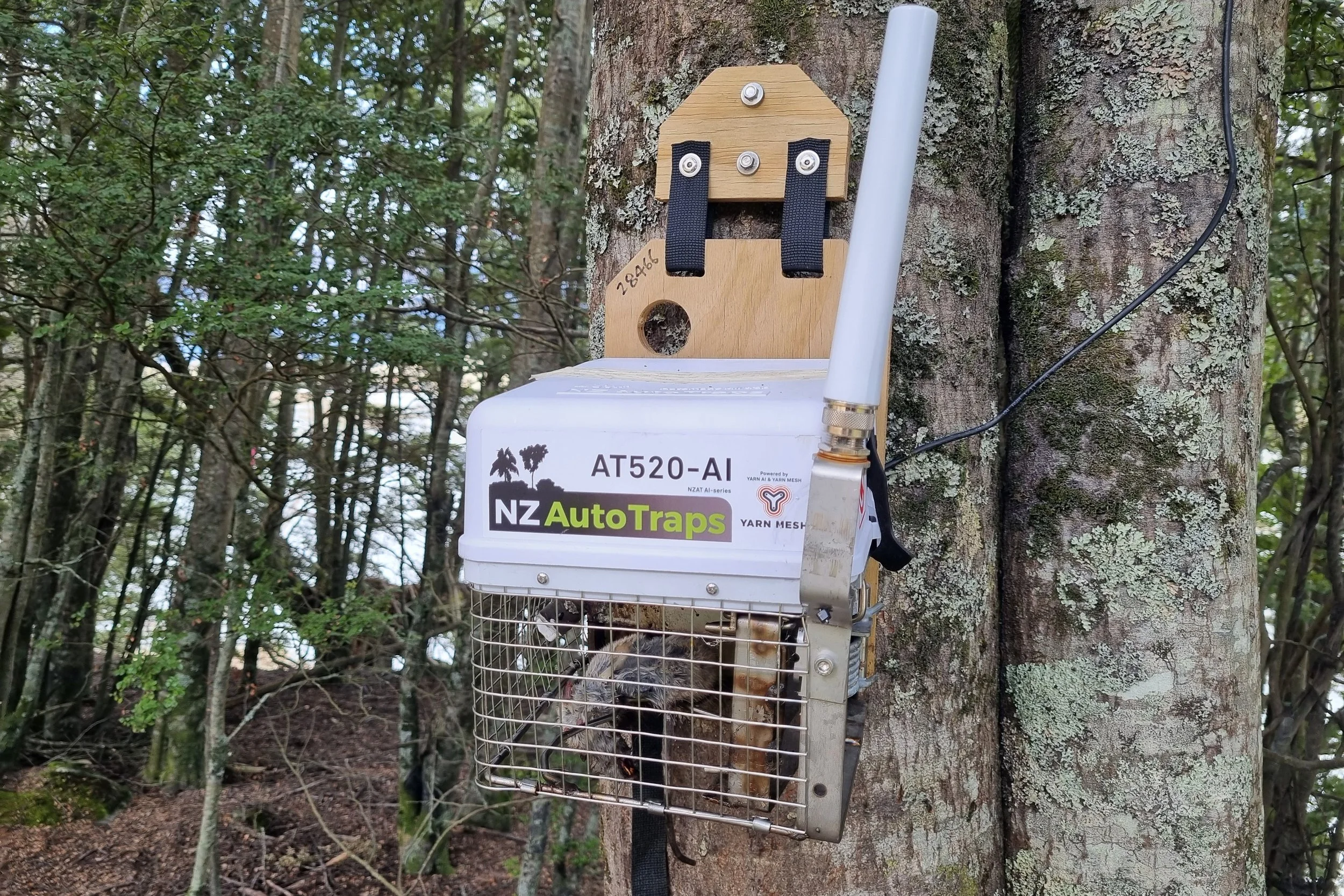
The AT520 trap is an auto-resetting and reluring pest trap that targets specific pests. Image: LEARNZ.