What is a Landslide?
A landslide occurs when earth, rock, vegetation, mud, or dirt suddenly loses its grip on a hill or mountain and starts sliding, tumbling, or rolling down the slope. A landslide is sometimes called a “slip” or “landslip”. Landslides vary in size from very small to large.
Landslides are common all over Aotearoa New Zealand.
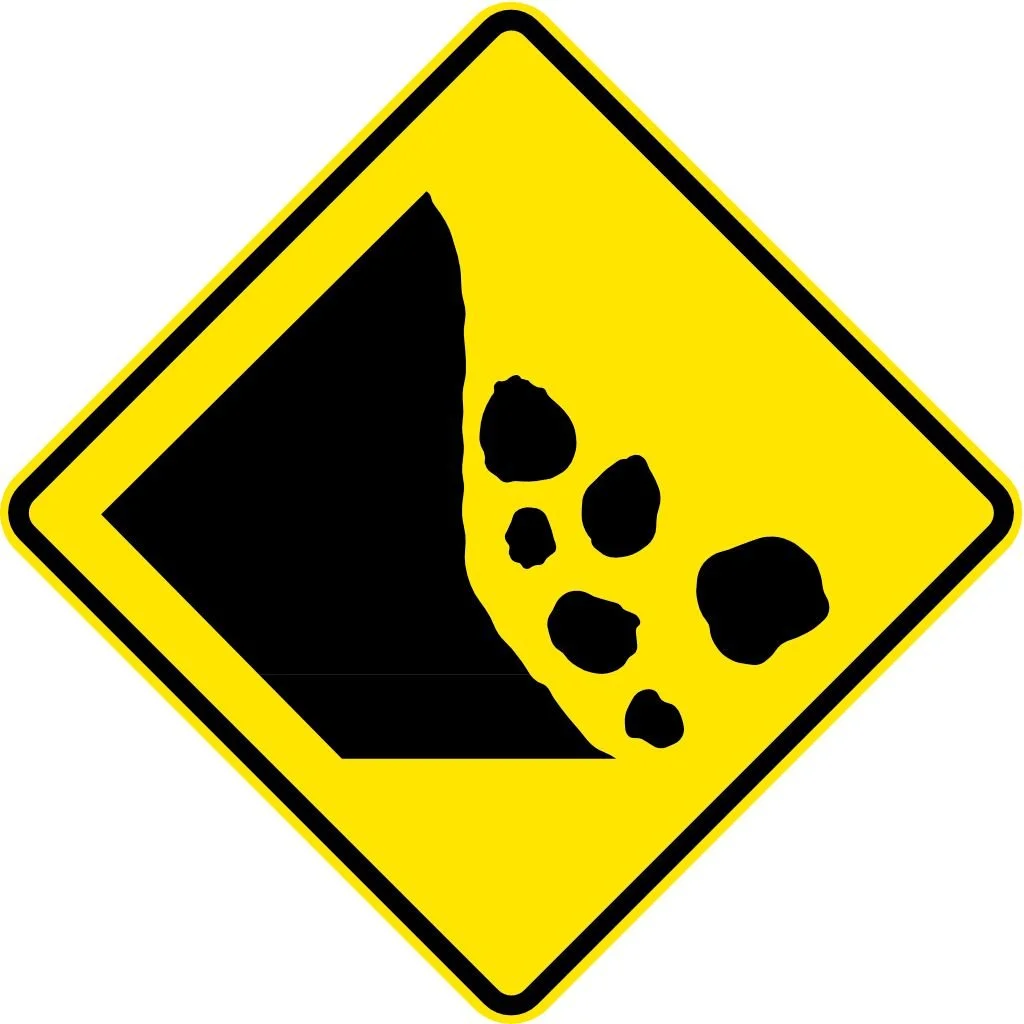
The international road sign for landslides—image: Waka Kotahi New Zealand Transport Agency.
Landslides need gravity. A landslide is only possible on a slope and will not happen on flat land, although it can spread out over flat land at the base of a hill or mountain.
There are many different types of landslides, and they range in size from a single boulder in a rock fall, to a very large avalanche of debris with huge amounts of rock and soil that spreads across many kilometres.
Types of landslides
Not all landslides look the same. They can move in different ways, and at different speeds. There are a few main types of movement:
Rockfall
This is when rocks break loose from a high cliff and bounce and crash straight down.
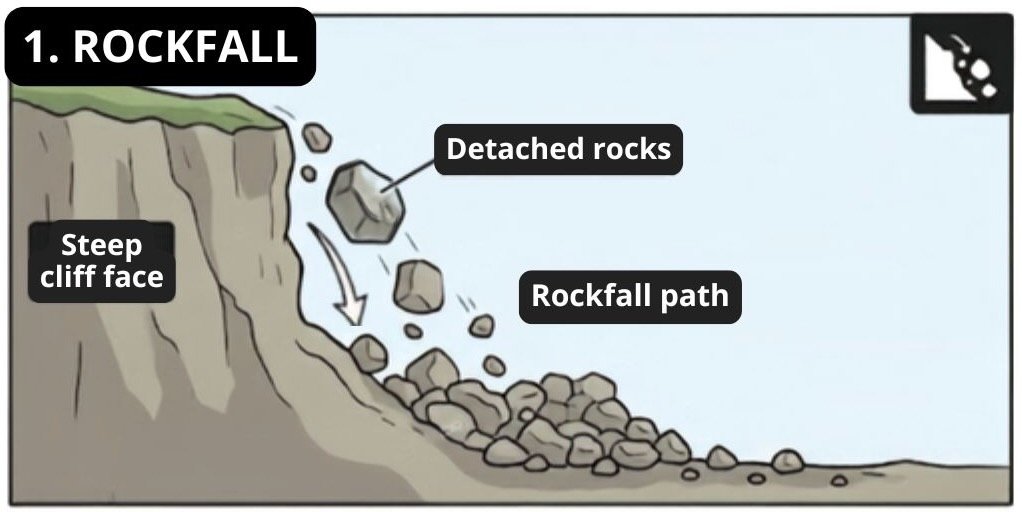
Image: LEARNZ
Avalanche
When a large amount of snow, ice, earth, rock, or other material quickly moves down a mountainside or over a cliff.
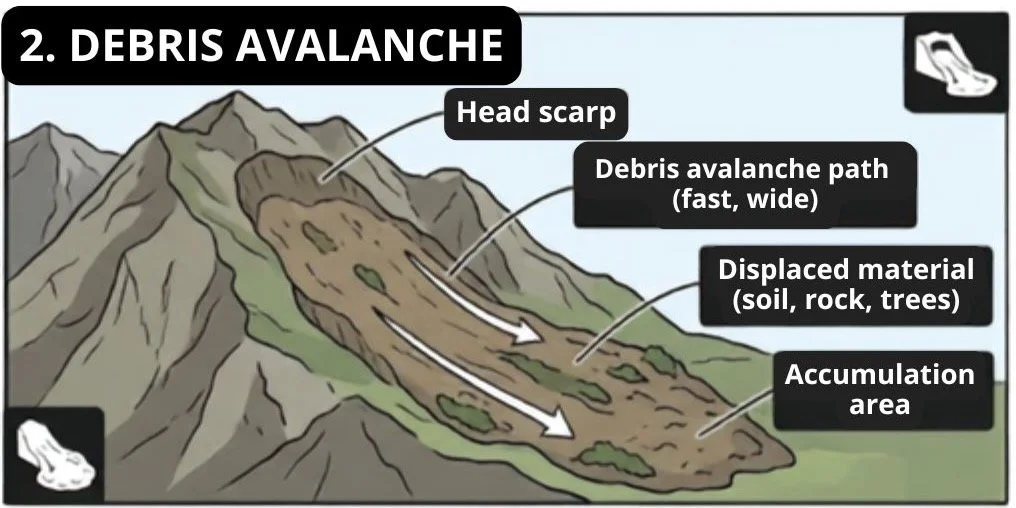
Image: LEARNZ
Debris Flow or Mudslide
This happens when water mixes with dirt to create a super-fast, soupy river of mud. It moves like a liquid but can carry heavy loads, such as trees and cars.
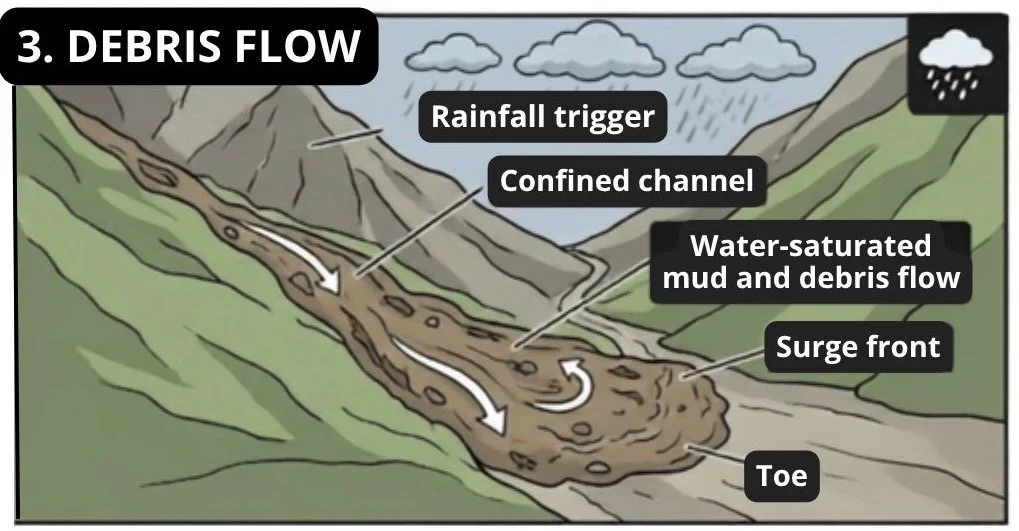
Image: LEARNZ
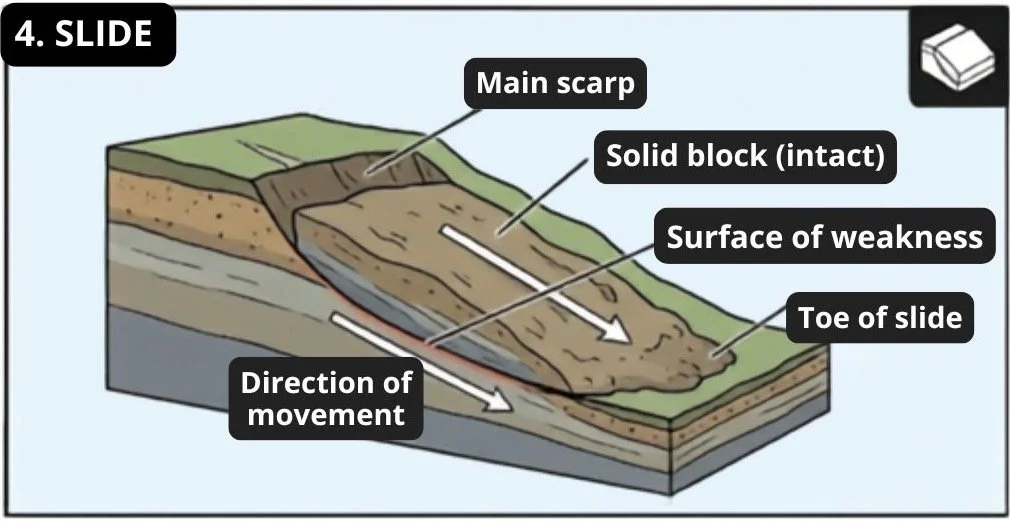
Slide
When land slides along a plane of weakness such as on a fault or weak rock layer.
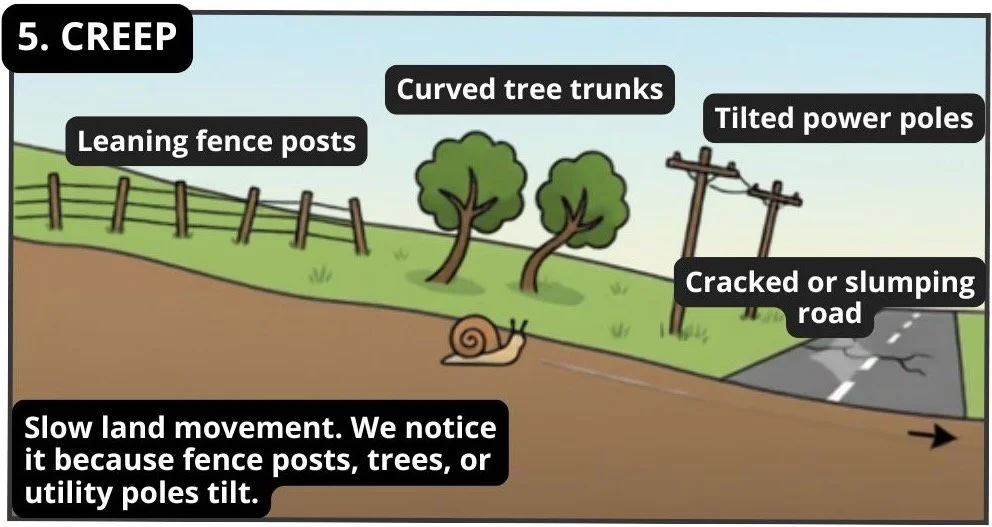
Creep
This is a landslide that moves very slowly—sometimes just a few centimetres a year. You might only notice it because the trees or fence posts on a hill start leaning over, or slumping.
Landslides don't just happen on land—they can happen underwater in the ocean too! When they do, they can sometimes push the water so hard that they create giant waves called tsunami.
Why do landslides happen?
Landslides happen when the strength of a slope is less than the stresses placed on that slope. The strength of a slope depends on the:
steepness of a slope
of rock and how strong that rock is
type of soil and how water moves through that soil type.
Why slopes fail
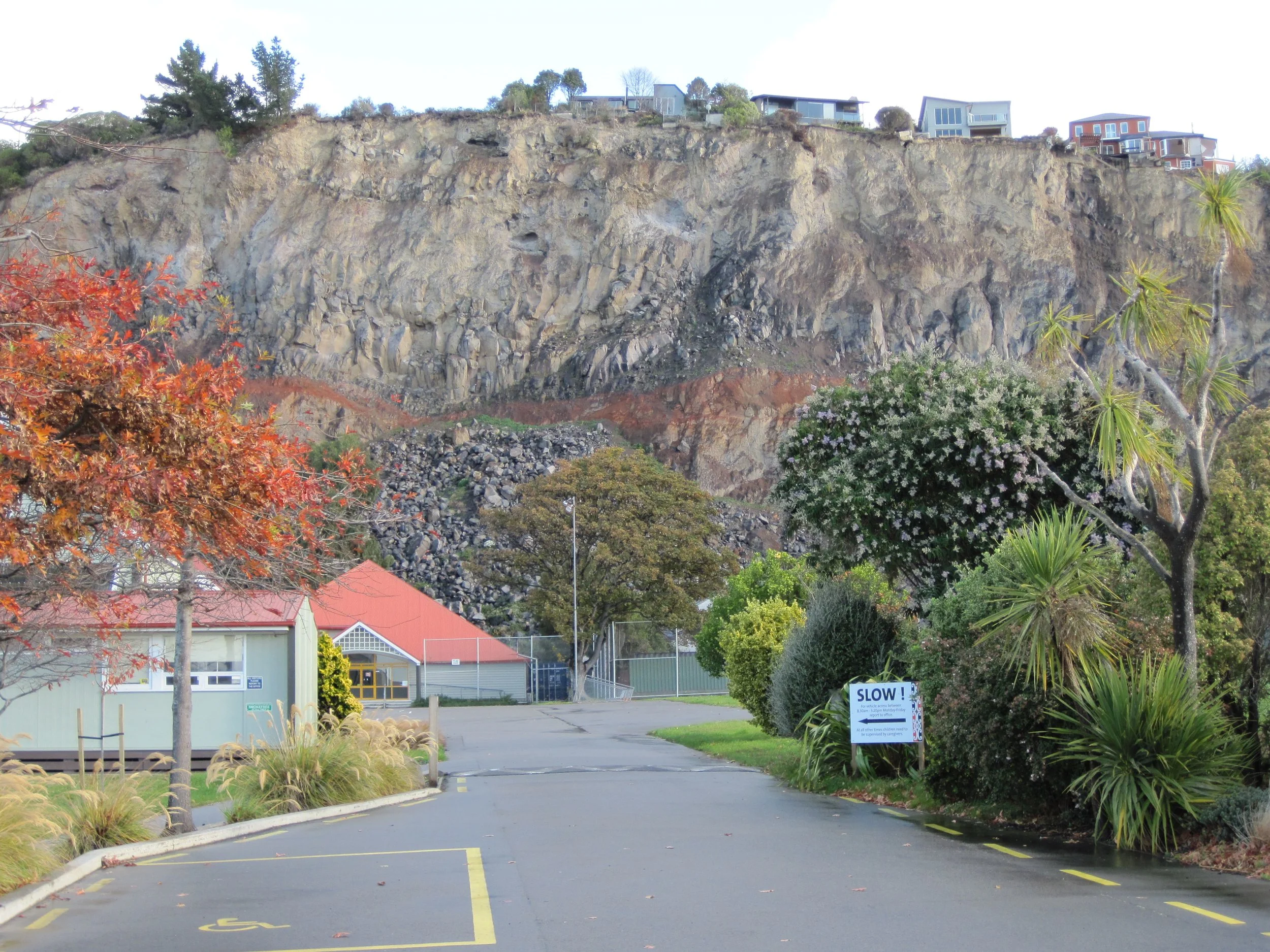
Landslides happen when a slope (like a hill or a cliff) loses its grip and falls apart (slope failure). This can happen in two ways: sudden shocks or gradual wear and tear.
Sudden shocks (fast stresses): Sometimes, a big event puts a lot of pressure on a hill all at once. A strong earthquake shaking the ground or a huge rainstorm soaking the dirt can quickly cause a landslide.
Slow wear and tear (gradual stresses): Other times, the damage occurs very slowly. Over many years, everyday weather, such as wind and rain, slowly weakens a slope. This process is called weathering, and if it continues, it can eventually lead to slope failures and even large landslides.