Landslide Triggers
Several things can cause landslides, but the main ingredients are;
water
shaky ground
changes to the land.
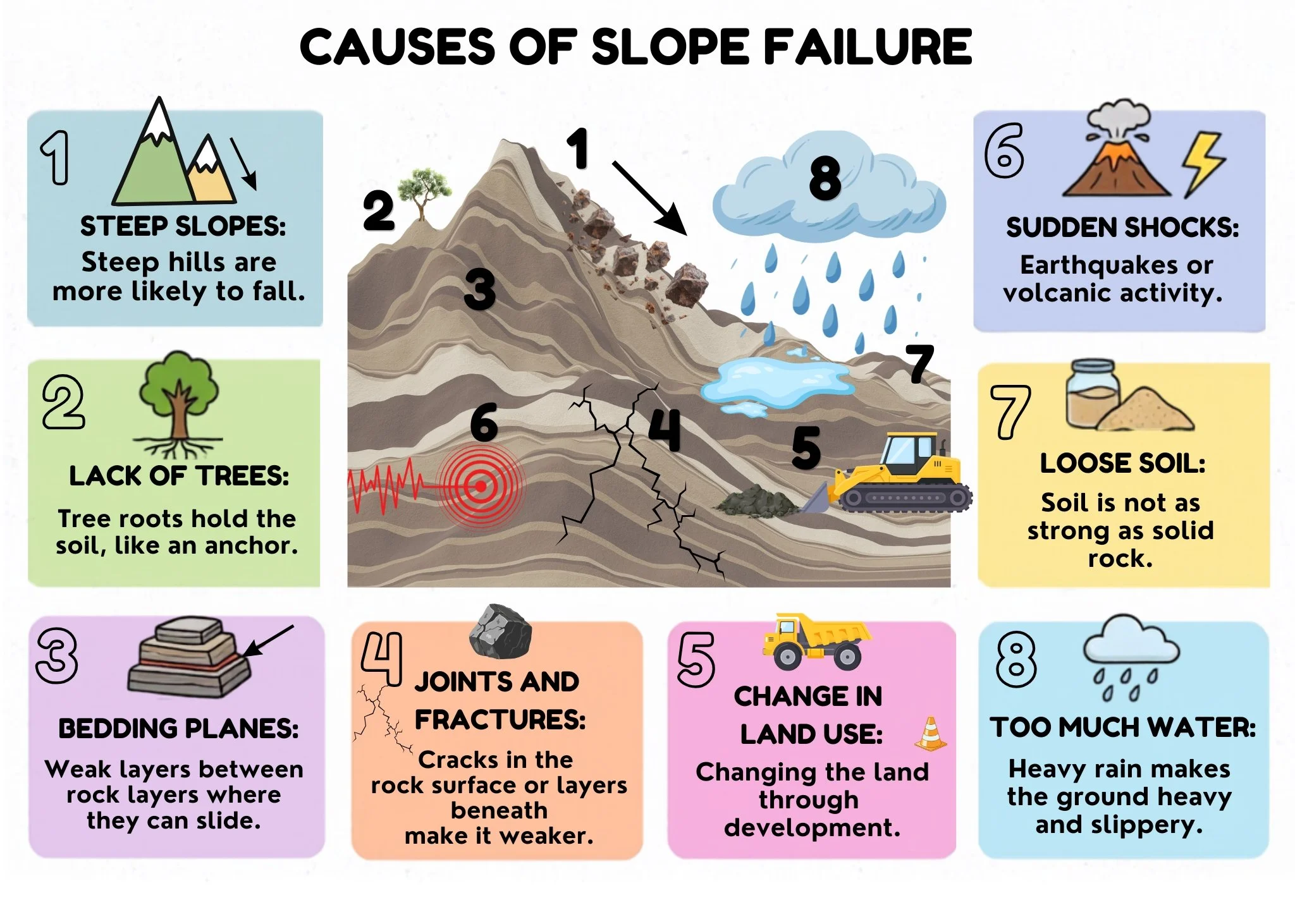
Image: LEARNZ
Water
Water is the number one cause of landslides worldwide. It flows into the ground and changes how the soil behaves.
Heavy rain, storms and flooding: When a huge storm hits, water rushes down a slope. The sudden pressure and weight of this water can push earth and debris with it.
Melting Snow: When warm weather arrives and snow melts too fast, it creates a river of water that weakens the hillside.
Ice: Frost action, or freeze-thaw weathering, can cause landslides in cold and mountainous regions. As water seeps into cracks in the rock, it can freeze and expand, creating pressure that shatters the rock. Repeated cycles of freezing and melting slowly weaken the slope until it collapses. Glaciers can also erode slopes.
Too little water (droughts): Surprisingly, a lack of water can also cause landslides. When the ground gets super dry during a drought, the soil cracks and loosens, making it more likely to fall away from the slope it is on. If plants die from drought, their roots can no longer hold the soil together.
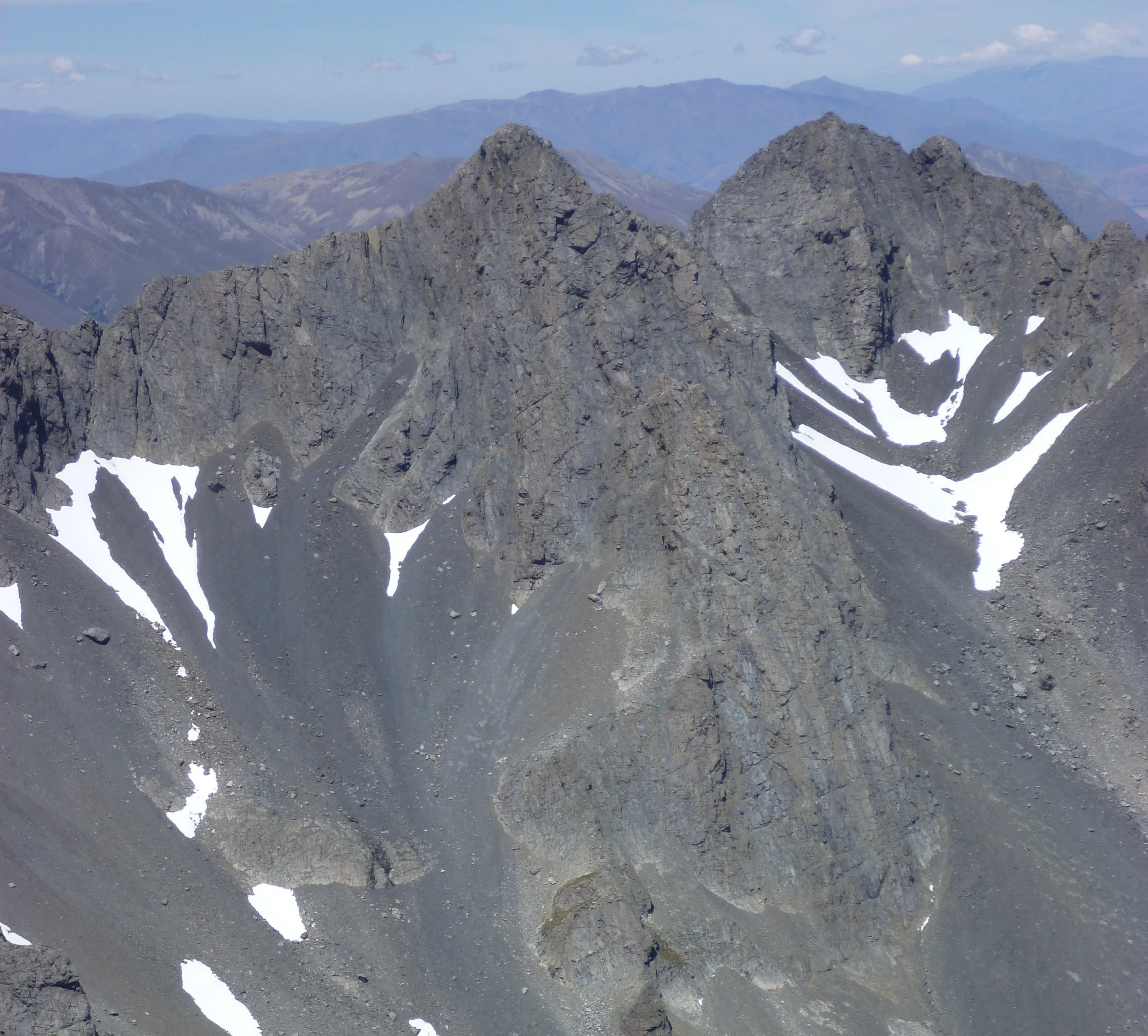
Freeze-thaw action in the mountains breaks apart rock, creating large scree slopes. Image: LEARNZ.
Shaky ground (seismic events)
The earth itself can shake things loose.
Earthquakes: A strong earthquake can violently shake a mountain, snapping rocks free and sending them tumbling. Earthquakes can even vibrate the ground so hard that the soil turns into a soupy liquid, creating a fast-moving mudslide.
Volcanoes: When a volcano erupts, it doesn't just spill lava. The blast shakes the surrounding land, and the volcano can push massive piles of ash and debris down its own slopes.
Erosion and human activity
Sometimes the bottom of a hill weakens, leaving the top unsupported. This is called erosion.
Nature's Power: Ocean waves crashing against a cliff or a rushing river cutting through a valley can eat away at the base of a slope until it collapses.
Human activity: People can accidentally cause landslides too. Cutting down forests (deforestation) and bush removes the tree roots that act as a safety net for the soil. Building roads or heavy houses on steep, unstable hills can also trigger a collapse.
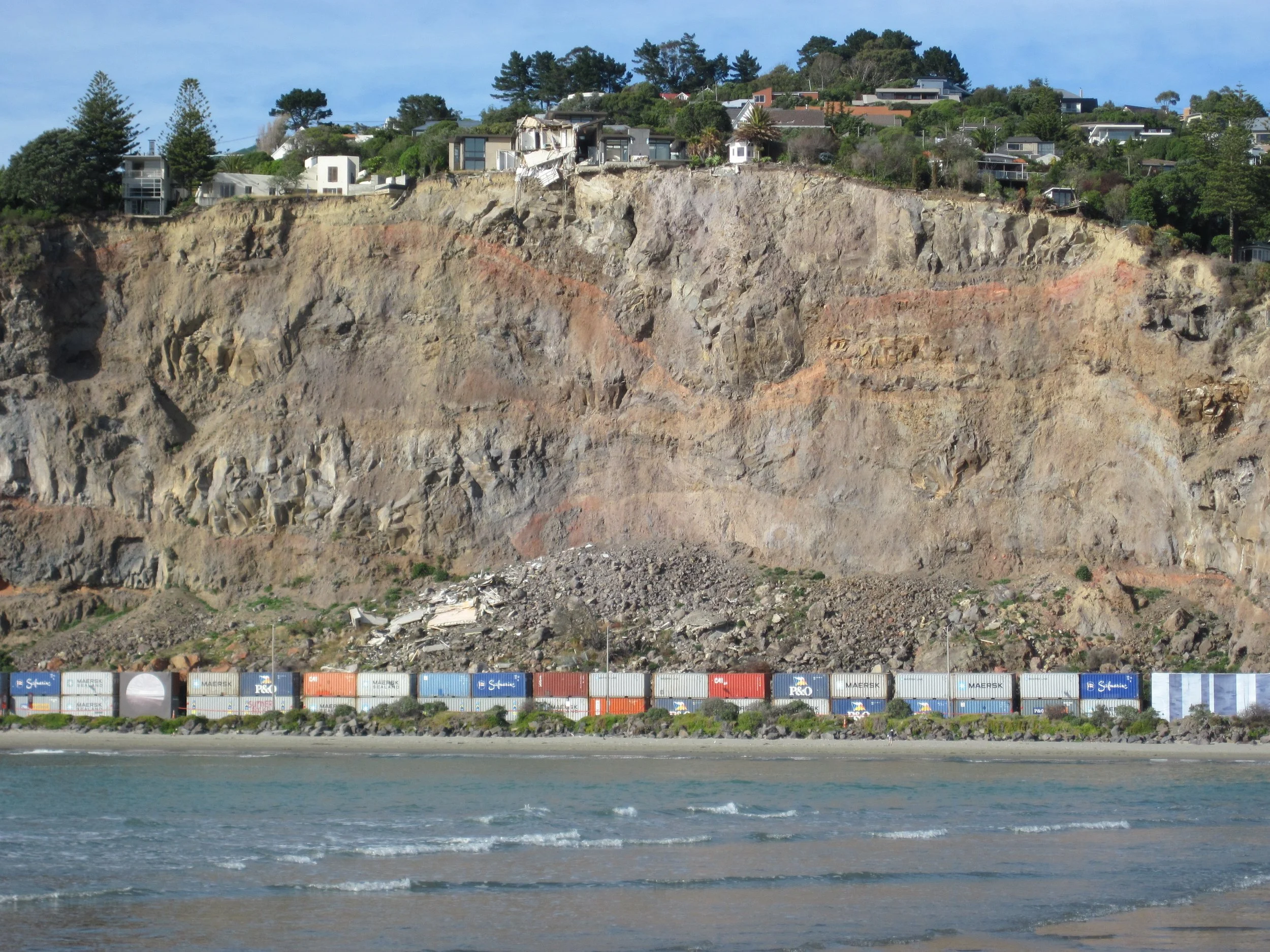
Earthquakes can trigger rockfall and widespread landslides. Image: LEARNZ.
Are landslides linked to climate change?
Yes, scientists have found a strong link. While events like earthquakes and storms are a natural part of Earth's cycle, climate change is leading to more extreme weather.
More powerful storms: Warmer temperatures lead to heavier rainfall and more flooding, which triggers more sudden mudslides.
Worse droughts and wildfires: Higher temperatures cause severe droughts and heatwaves. This dries out the soil and fuels wildfires that burn away the protective plants and trees.
As the world's population grows, more people are building homes in areas at risk of landslides. This is why scientists and engineers are working hard to study how climate change affects hillsides, helping communities to prepare for future landslides.