Ngā awa kōpaka i Aotearoa
Aotearoa is home to thousands of glaciers. These giant, moving rivers of ice exist because of our tall mountains and high snowfall.
Most of our glaciers are found in Te Waipounamu | the South Island, along Kā Tiritiri o te Moana | the Southern Alps. But if you live in the North Island, you can spot them on Mt Ruapehu.
The recipe for a glacier: Snow and mountains
Why does Aotearoa have so many glaciers? It all comes down to our climate and plate tectonics uplifting our mountains. A weather pattern called the orographic effect helps produce lots of precipitation (rain and snow) to feed the glaciers.

Image: LEARNZ.
Here is how it works:
Soggy winds: New Zealand sits in a windy part of the world called the "Roaring Forties." Strong winds blow from the west, picking up lots of moisture as they travel across the Tasman Sea.
The mountain wall: When these wet winds hit the high mountains of the South Island, they can't go through them, so they are forced to climb up and over them.
The big squeeze: As the air rises, it cools quickly, so the clouds can’t hold all their moisture and release it like a soaked sponge. This water falls as rain or snow if it’s cold enough.
Snow for glaciers: On the western side of the mountains, it dumps massive amounts of rain and snow. This heavy snow piles up year after year, creating glaciers.
The rain shadow: By the time these westerly winds move over and down the eastern side of the mountains, they have run out of water. This leaves the eastern side much drier, creating what’s known as a "rain shadow."
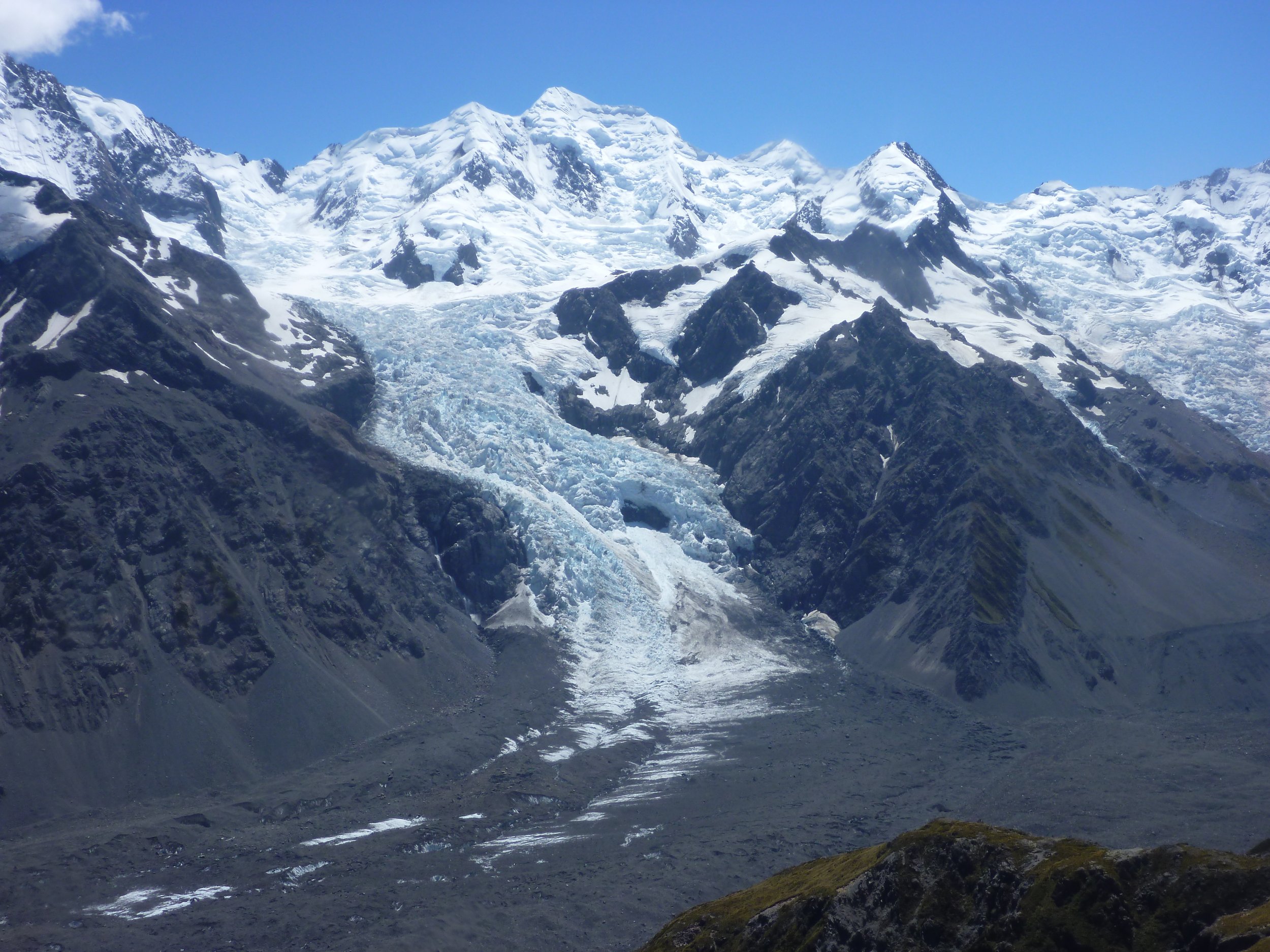
Hochstetter Icefall above Haupapa Tasman Glacier. Image: LEARNZ.
How many glaciers are left?
Counting glaciers is a big job.
In the late 1970s, a scientist named Trevor Chinn counted every glacier bigger than a hectare (about the size of a playground). They found over 3,100 glaciers in New Zealand.
Today, as Earth's temperatures have warmed, many have melted. Now, fewer than 3,000 glaciers remain in Aotearoa.
Glacier hotspots in New Zealand
The North Island: Volcano Glaciers
The North Island only has glaciers in one place: on top of Mt Ruapehu, an active volcano. It has 18 glaciers, including one sitting right inside the volcanic crater. Because the volcano is active, it sometimes spits hot ash and rocks onto the ice, which makes the glaciers melt faster.
The South Island: The Ice Giants
The South Island is the ultimate glacier kingdom. The highest mountains get the most snow, which means they have the biggest glaciers.
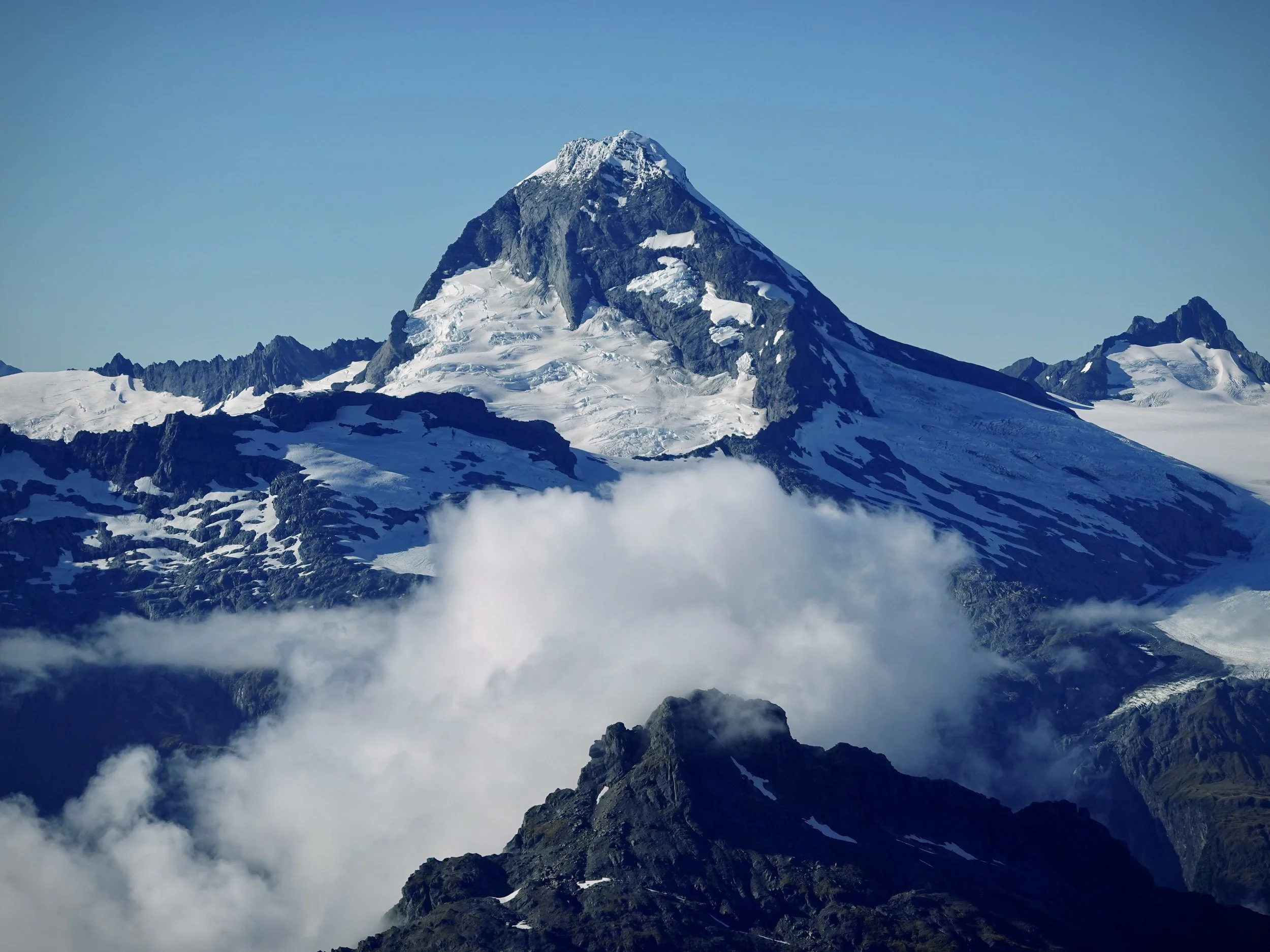
Tititea Mount Aspiring. Image: LEARNZ.
Haupapa | The Tasman Glacier: This is our longest and largest glacier, stretching over 20 kilometres long.
Famous Twins: On the west side of the mountains, you'll find Te Moeka-o-Tuawe | Fox Glacier and Kā Roimata-o-Hinehukatere | Franz Josef Glacier.
The Southernmost Ice: The furthest south you can find glacier ice in New Zealand is on Caroline Peak, high above Lake Hauroko.
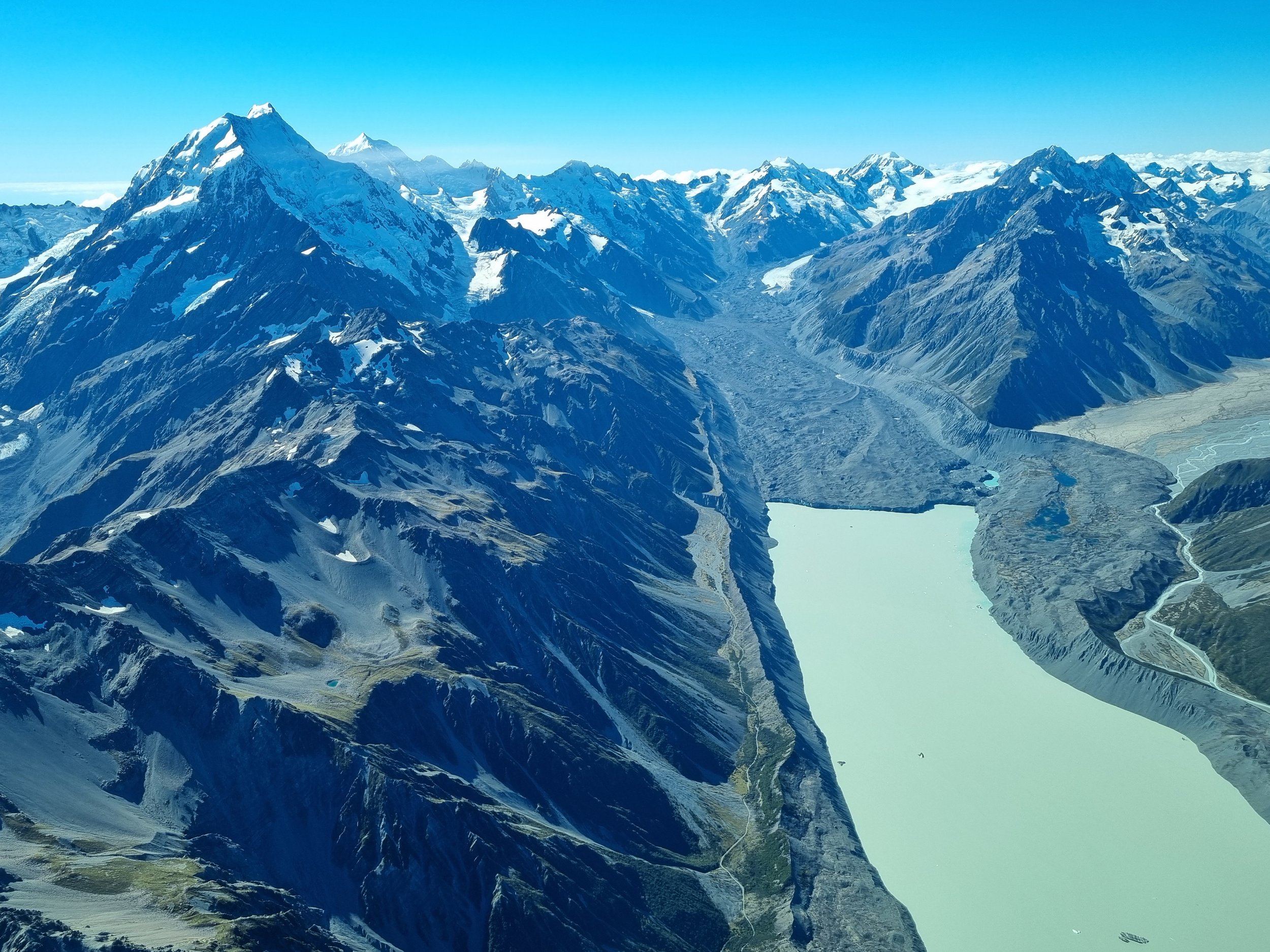
Haupapa Tasman Glacier – the largest and longest glacier in Aotearoa. Image: LEARNZ.
What plane crashes can tell us about glacier movement
Although glaciers look like they don’t move, they are actually moving at different speeds. We know this thanks to two accidental science experiments involving plane crashes:
In 1943, a plane crashed high up on Franz Josef Glacier. Just six years later, the broken pieces of the plane popped out at the very bottom of the glacier. The ice had carried it 3.6 kilometres downhill. That means the glacier was moving at about 600 metres a year.
In 1952, another plane crashed on Mangatoetoenui Glacier on Mt Ruapehu. It took 31 years just for the wreckage to move 600 meters. This glacier was moving much more slowly, at 20 meters a year.