The frozen treasures of Aotearoa
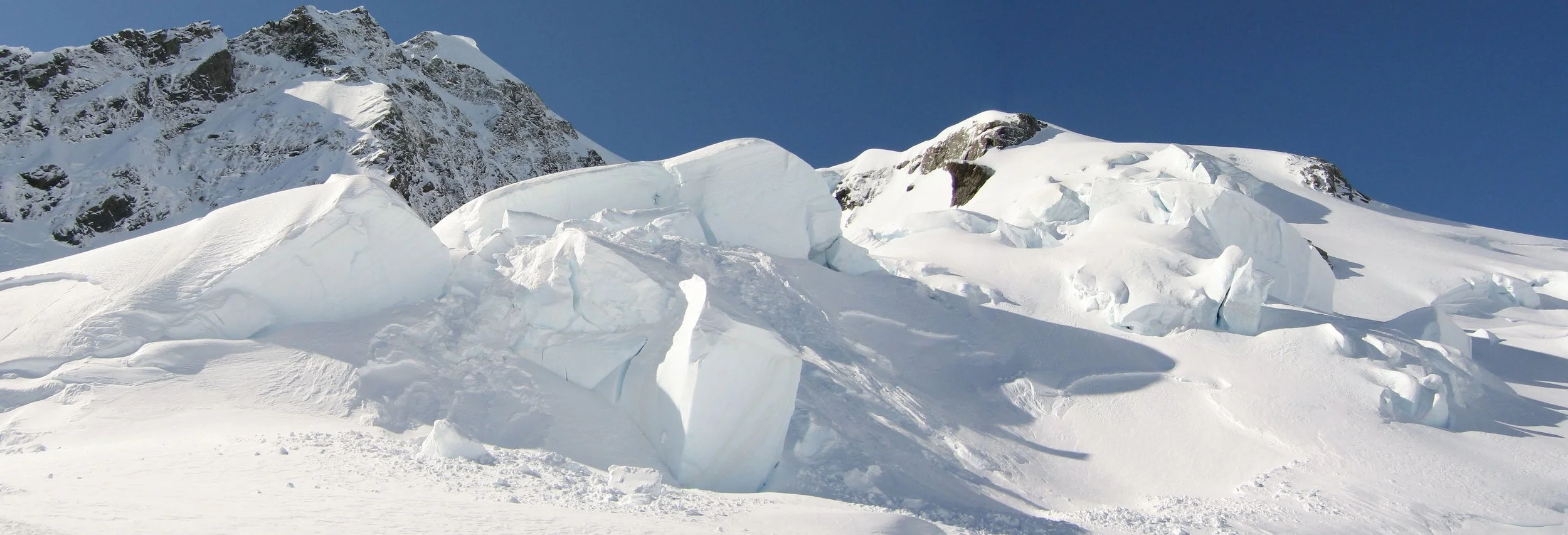
Image: LEARNZ.
In Aotearoa, glaciers aren't just giant blocks of ice—they are taonga (treasures). For Māori, glaciers are sacred ancestors, living history books, a source of fresh water and a vital part of te taiao, the environment.
Ki uta ki tai
Ki uta ki tai in te ao Māori means "from the mountains to the sea". It is an understanding that everything in nature is connected in a living system. What happens high up in the icy mountains affects everything below: the rivers, the forests, the estuaries, and finally the ocean. The mountains and glaciers are the starting point of this whole living system.
Legend of the frozen tears
In Māori tradition, glaciers have deep, personal stories. The two most famous glaciers on Te Tai o Poutini | the West Coast have special names that tell us how they were made:
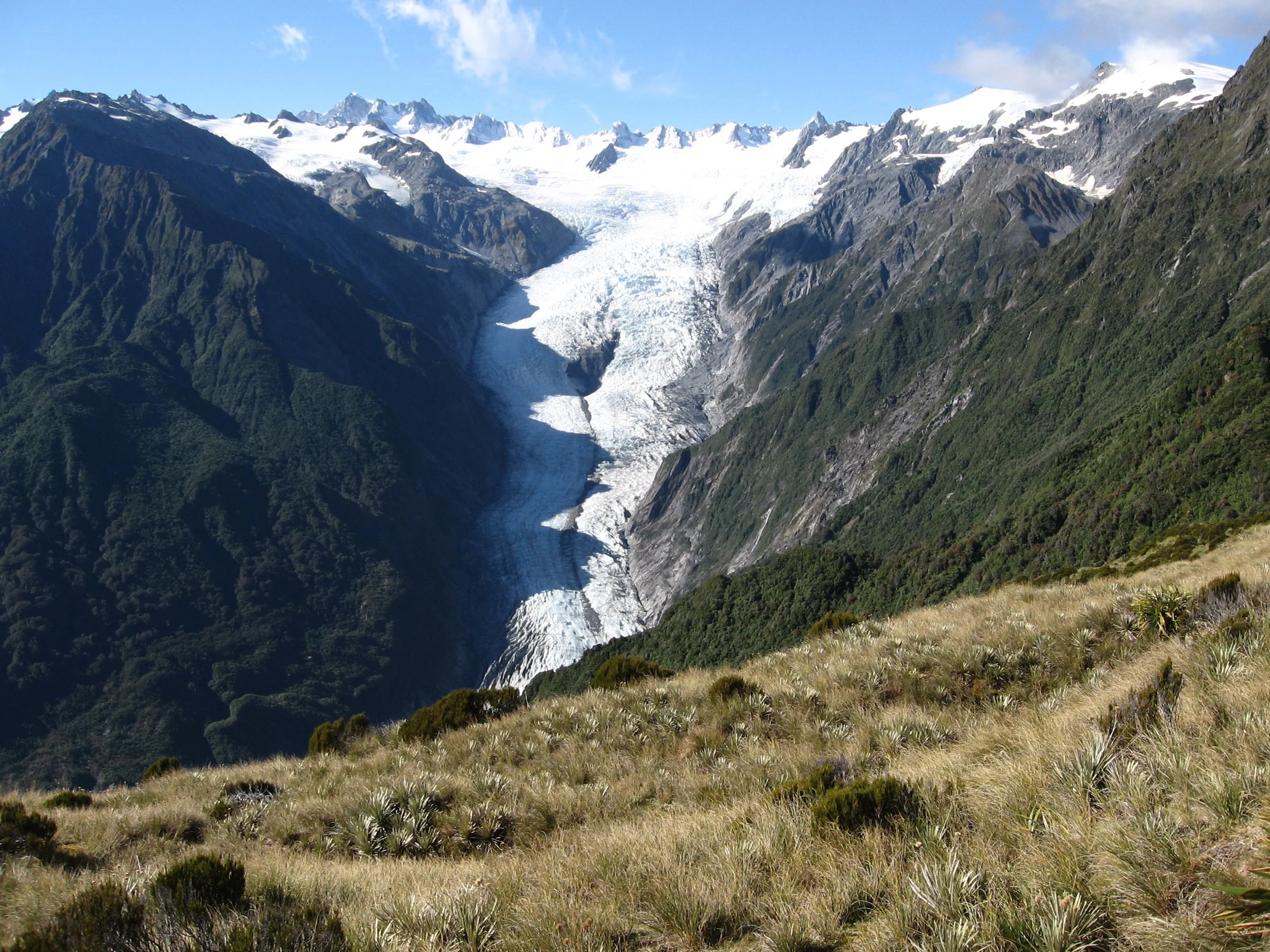
Kā Roimata o Hine Hukatere Franz Josef Glacier. Image: LEARNZ.
Kā Roimata o Hine Hukatere | Franz Josef Glacier: This name means "The Tears of the Avalanche Maiden." Legend says a brave girl named Hine Hukatere loved climbing the mountains. She persuaded her lover, Wawe, to come with her, but tragically, he fell from the peaks. Hine Hukatere was so heartbroken that she cried floods of tears. The gods froze her immense grief into ice, creating the glacier.
Te Moeka o Tuawe | Fox Glacier: This means "The Resting Place of Tuawe," named in honour of that same lost explorer.
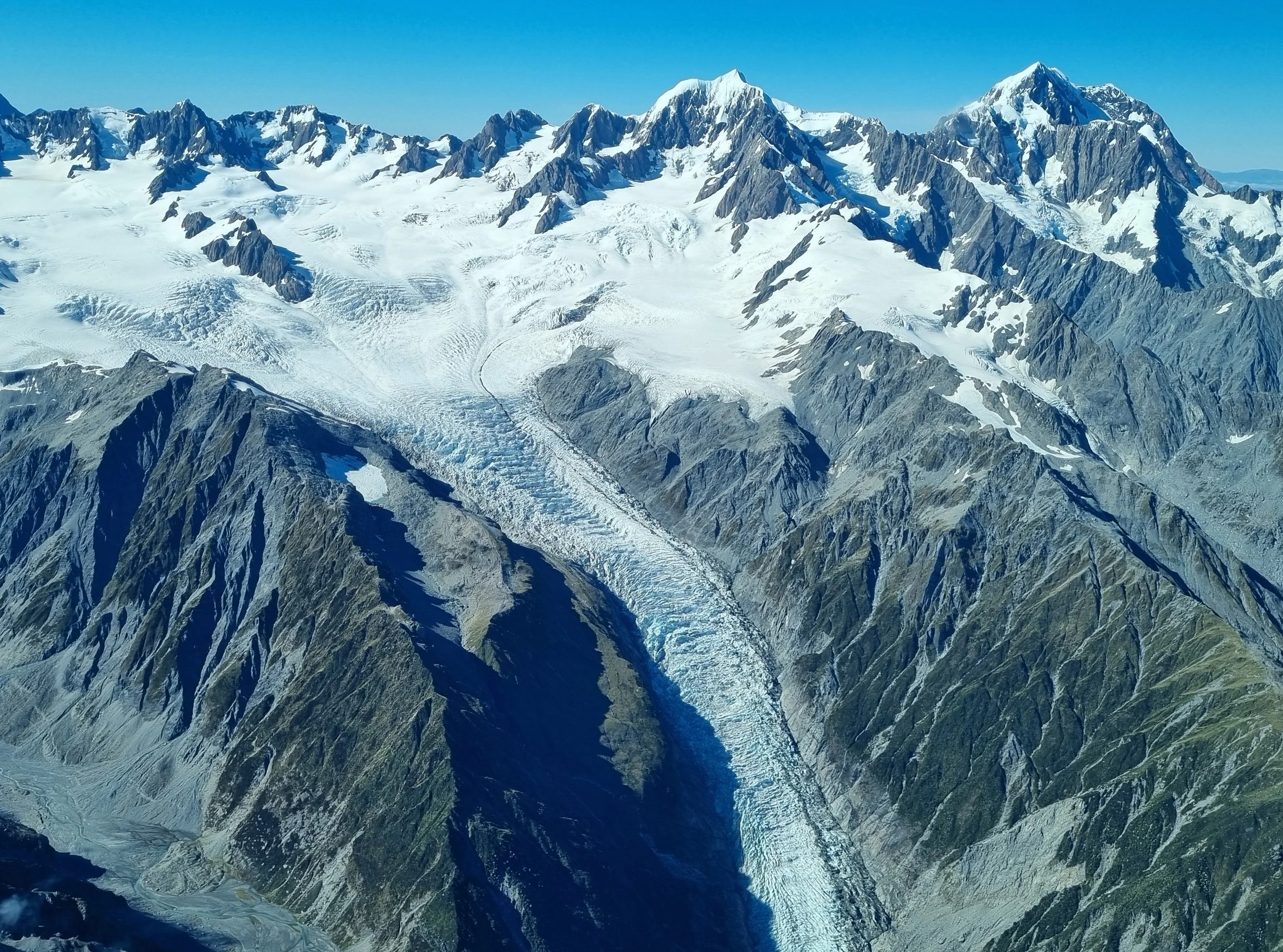
Te Moeka o Tuawe Fox Glacier. Image: LEARNZ.
Water stores
Glaciers store huge amounts of fresh water up high in the mountains and slowly melt to feed our rivers, keeping the whole environment healthy and alive.
Here is how glaciers help us:
Giant savings accounts: During the freezing winter, glaciers store water as ice. In the hot summer, they slowly melt and release that water into rivers exactly when plants, animals, and people need it most.
Making clean energy: The water rushing down from melting glaciers is used to spin giant turbines that make hydroelectricity—a clean, renewable form of electricity.
Helping our farms: Farmers use this dependable river water to grow food and supply animals with water.
A safe home for wildlife: By feeding the rivers, glaciers provide a home for native fish, birds, and plants.
Gold and pounamu
As giant glaciers slowly crawled down valleys over thousands of years, they acted like massive delivery trucks, moving treasures from mountaintops to where people could find them.
Gold: Glaciers crushed rocks and carried gold down into the riverbeds and onto West Coast beaches.
Pounamu (greenstone): Moving ice carried precious pounamu down valleys such as the Taramakau and Arahura, leaving it in the rivers where it is gathered from.
Kaitiakitanga
Right now, our glaciers are melting and shrinking very fast because the Earth is getting warmer. Around the world, glaciers store 70% of our planet's freshwater and regulate our climate by reflecting sunlight into space. Many Māori communities act as kaitiaki (guardians) of our glaciers. Kaitiakitanga is the act of protecting the land, water, and wildlife so they stay healthy for future generations.
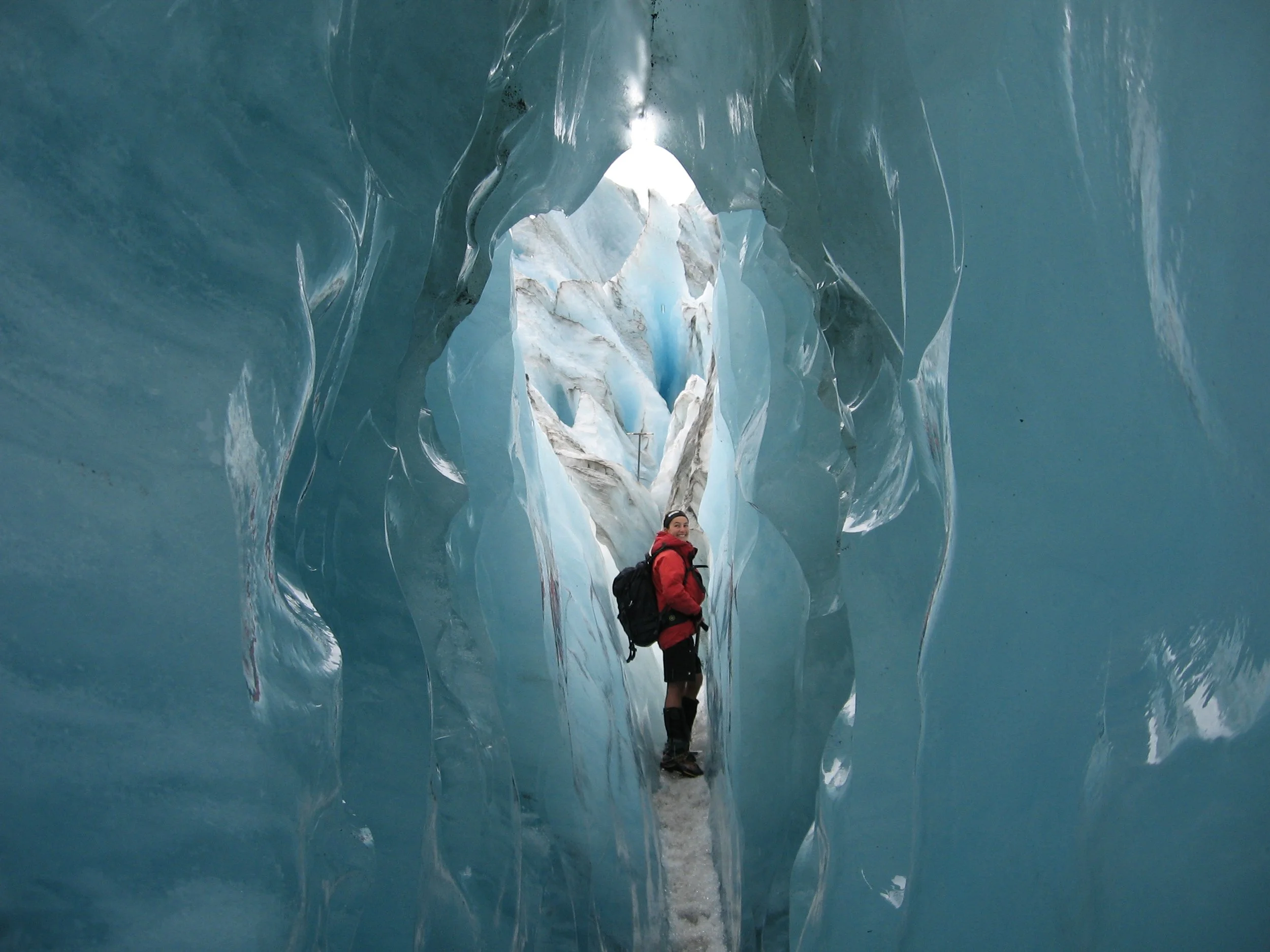
Glacier tourism - a guided hike on Kā Roimata o Hine Hukatere Franz Josef Glacier. Image: LEARNZ.
Māori tourism businesses and guides in Kā Tiritiri o te Moana, the Southern Alps, welcome manuhiri (visitors) from all over the world. By sharing mātauranga Māori (traditional knowledge) and these ancient stories, they teach people why we must care for and protect these icy giants before they disappear.
On a global scale, glaciers are also very important. If all of the glaciers and ice sheets in the world melted, global sea level would rise by more than 60 metres.