Landslide Impacts
Global impacts
Landslides are common and can happen anywhere in the world. It’s estimated that 400,000 landslides are triggered by heavy rainfall each year, and earthquakes cause 130,000. Landslides kill thousands of people every year, and cause billions of dollars’ worth of damage.
Landslides can be devastating if they happen in places where lots of people live. An example of this is a landslide in Papua New Guinea in May 2024. This landslide is thought to have killed around 2,000 people and destroyed 150 homes. The landslide was caused by weeks of heavy rain weakening the side of a mountain.
The largest recorded landslide, Mount St. Helens, USA (1980)
The largest landslide ever recorded on land happened at Mount St. Helens. Shaking and rumbling deep inside the volcano triggered a massive landslide that raced down the mountain at speeds between 112 and 240 km/h – much faster than a car on a highway. The landslide debris was incredibly deep, averaging about 46 metres —enough to bury a 15-storey building! It left a giant crater in the side of the volcano that you can still see today.
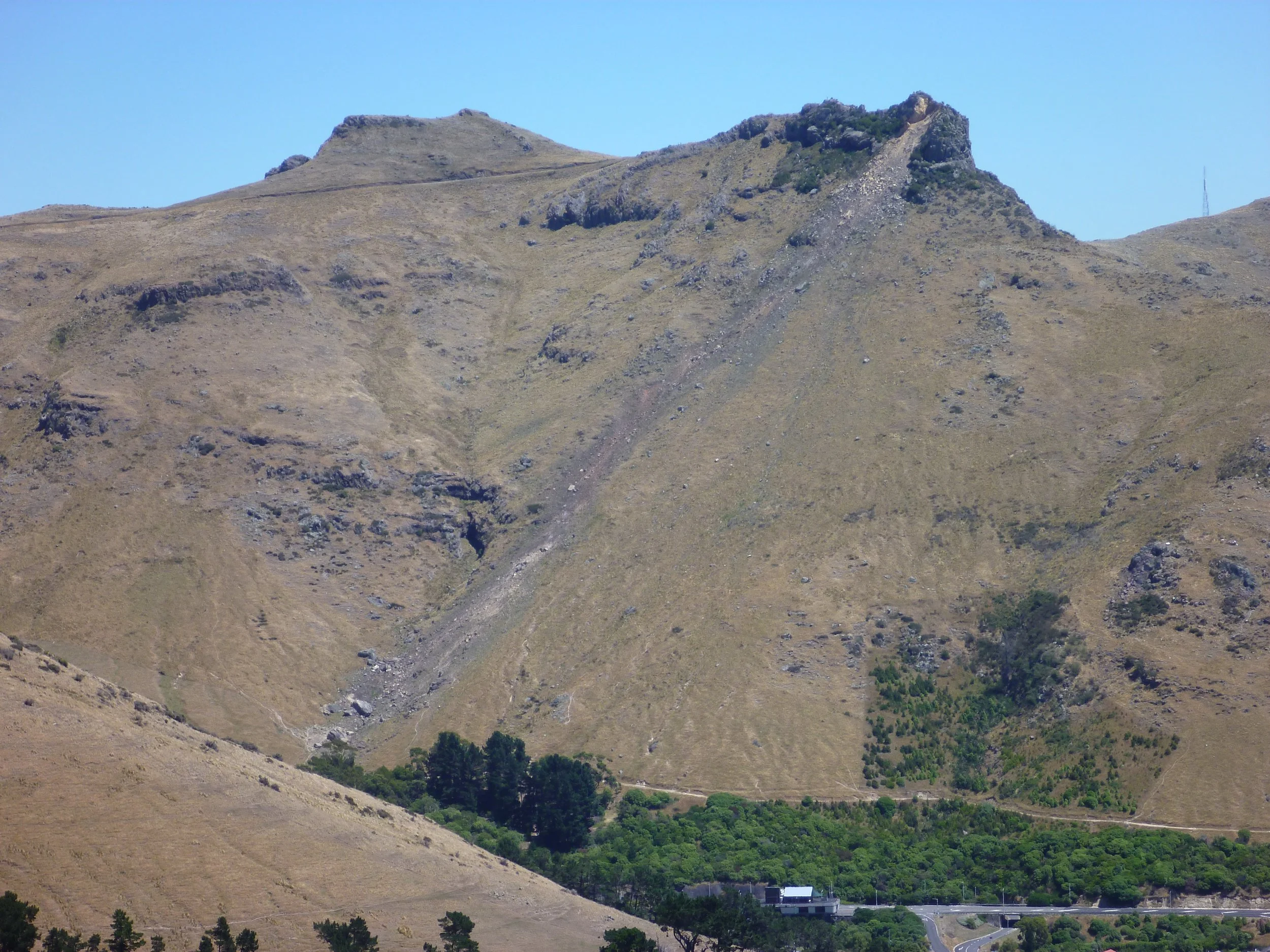
Rockfall can impact large areas as boulders roll and bounce down a slope, gaining momentum. Image: LEARNZ.
Landslide hazards
Landslide hazards can be divided into two main categories:
Slippage
Landslide runout
Slippage is the movement or loss of land from a slope when a landslide occurs beneath it (the landslide source area).
Landslide runout is the covering of an area by rock, debris, soil, and other material that is travelling downslope from the landslide source area. This debris can crush cars, buildings, and people, and move heavy objects.
The hazard a landslide poses depends on its size, the distance (runout) it travels, and the speed of movement. A large, fast-moving landslide is more dangerous than a small, slow-moving landslide.
How landslides cause damage
Direct impacts
When a landslide rushes down a hill, it carries a mix of mud, rocks, and debris. This heavy, moving mass can crush or bury almost anything in its path, including homes, roads, railways, and phone or electricity lines.
At first, everything in a landslide slides together. However, if large rocks and boulders hit objects on the way down, they can start to roll instead of slide. As these boulders roll and bounce down the slope, they gain momentum. Because they are rolling, they can travel faster and further than the rest of the mud and debris, causing more widespread damage.
Secondary impacts
Landslide dams and flooding:
Sometimes, a landslide spills into a valley and completely blocks a flowing stream or river. This creates a natural wall known as a landslide dam. What happens next depends on how strong the dam is:
Permanent Dams: Some landslide dams are so solid they become a permanent part of the landscape, creating a new lake behind them.
Dam Failures: Other dams are unstable. Over time, water can overflow across the top (overtopping), or the constant water pressure and erosion can slowly wear the dam away until it bursts.
If a landslide dam suddenly fails, all the trapped water rushes out at once, causing severe flash flooding for people and property living downstream.
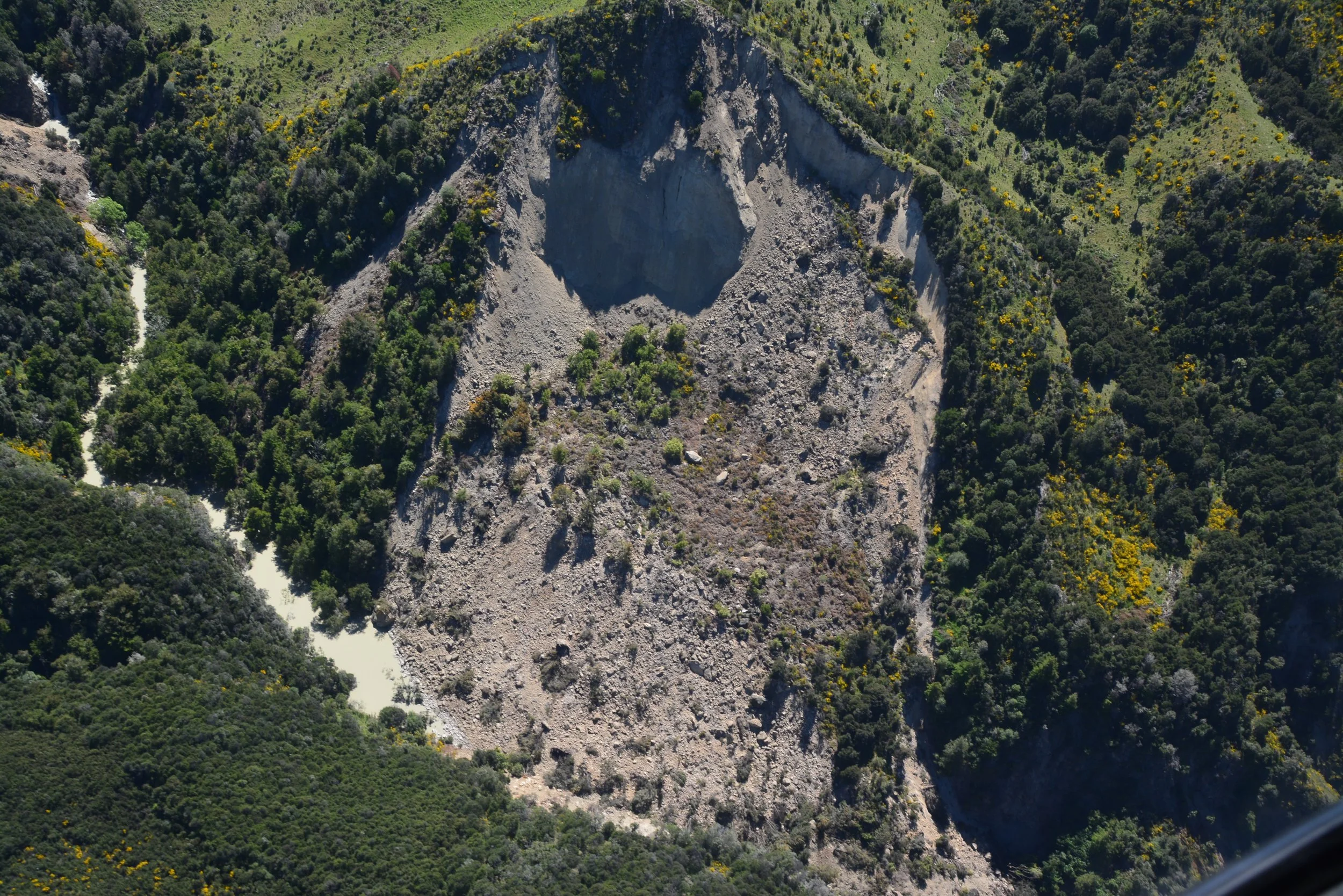
There were hundreds of landslides triggered by the 2016 Kaikōura earthquake, some of which dammed rivers—image: GeoNet Earth Sciences NZ.
Tsunami | Tai āniwhaniwha
Landslides that fall into water bodies, such as lakes, fiords and the sea, can also generate tsunami.
Impacts on buildings
Homes on or around unstable slopes and hills can quickly become damaged or unsafe if the ground moves. Damage can occur over time due to slow-moving land instability, or quickly due to rapid slippage following an earthquake or intense rainfall.
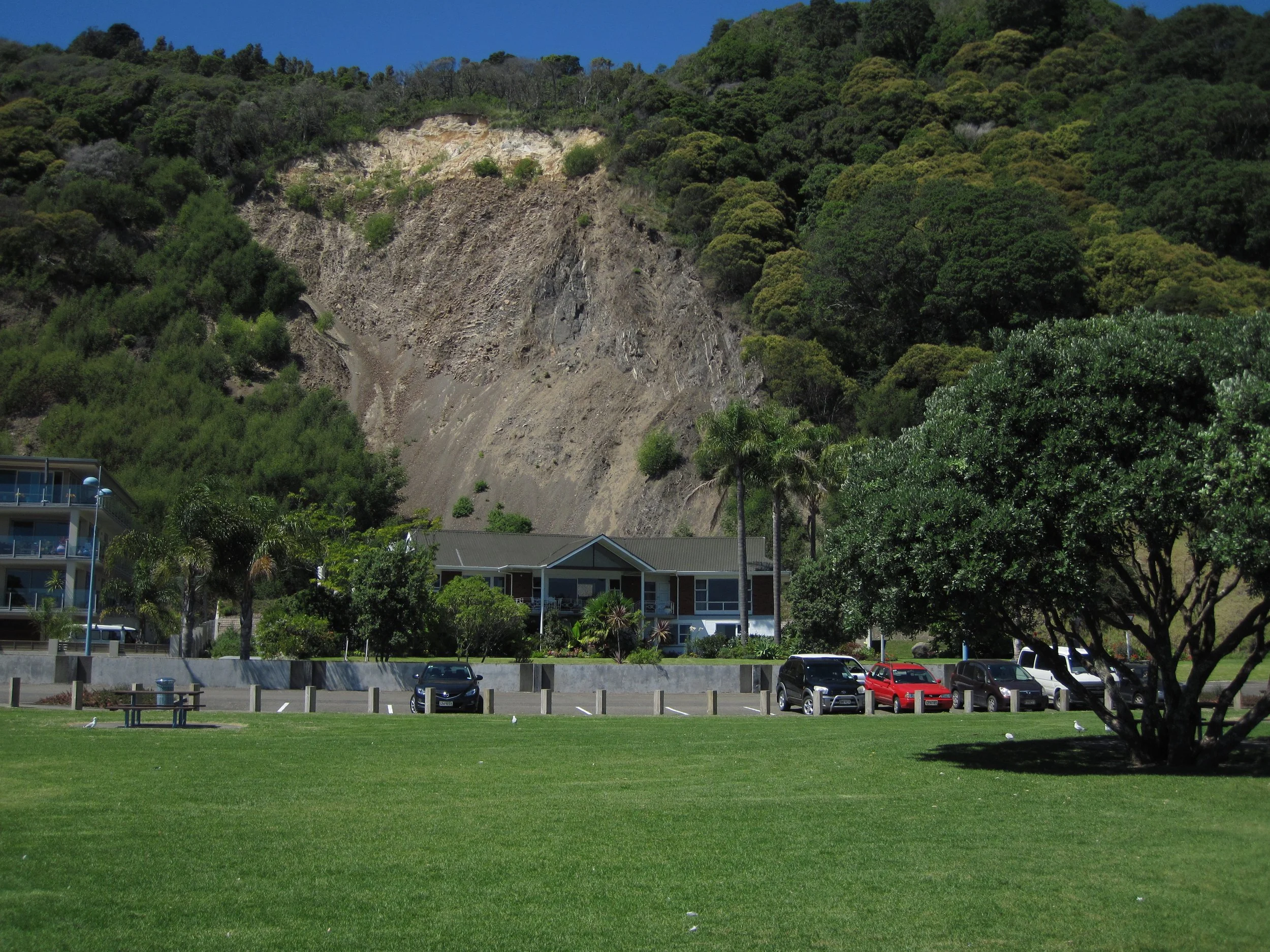
Landslides can happen anywhere and are the most common natural hazard in Aotearoa. Image: LEARNZ.
Slow-moving landslides can be disruptive and may cause:
cracks in foundations, floors and walls
uneven floors
doors or windows that no longer close properly
cracks or damage to retaining walls
damage to outside features such as sections pulling away from the building, or diagonal cracks in plaster, brickwork, solid walls or foundations
damage to underground infrastructure, such as pipes.
Rapid landslides can be very dangerous and may cause:
inundation of property by rock, soil and trees
complete or partial building collapse
failing of retaining walls
loss or disruption of services to the building, such as power
undercutting of foundations and/or movement of homes away from foundations.