Living with Landslides
Landslides are a big problem in Aotearoa.
Landslides have killed more people than all other natural hazards combined.
Landslides cost this country, on average, $250 to 300 million dollars a year.
To manage the impacts of landslides, people need to know the following:
What type of landslide could occur?
Where could the landslide happen?
How big might the landslide be?
How often do landslides happen in a particular place?
What is the impact of a landslide in a particular place?
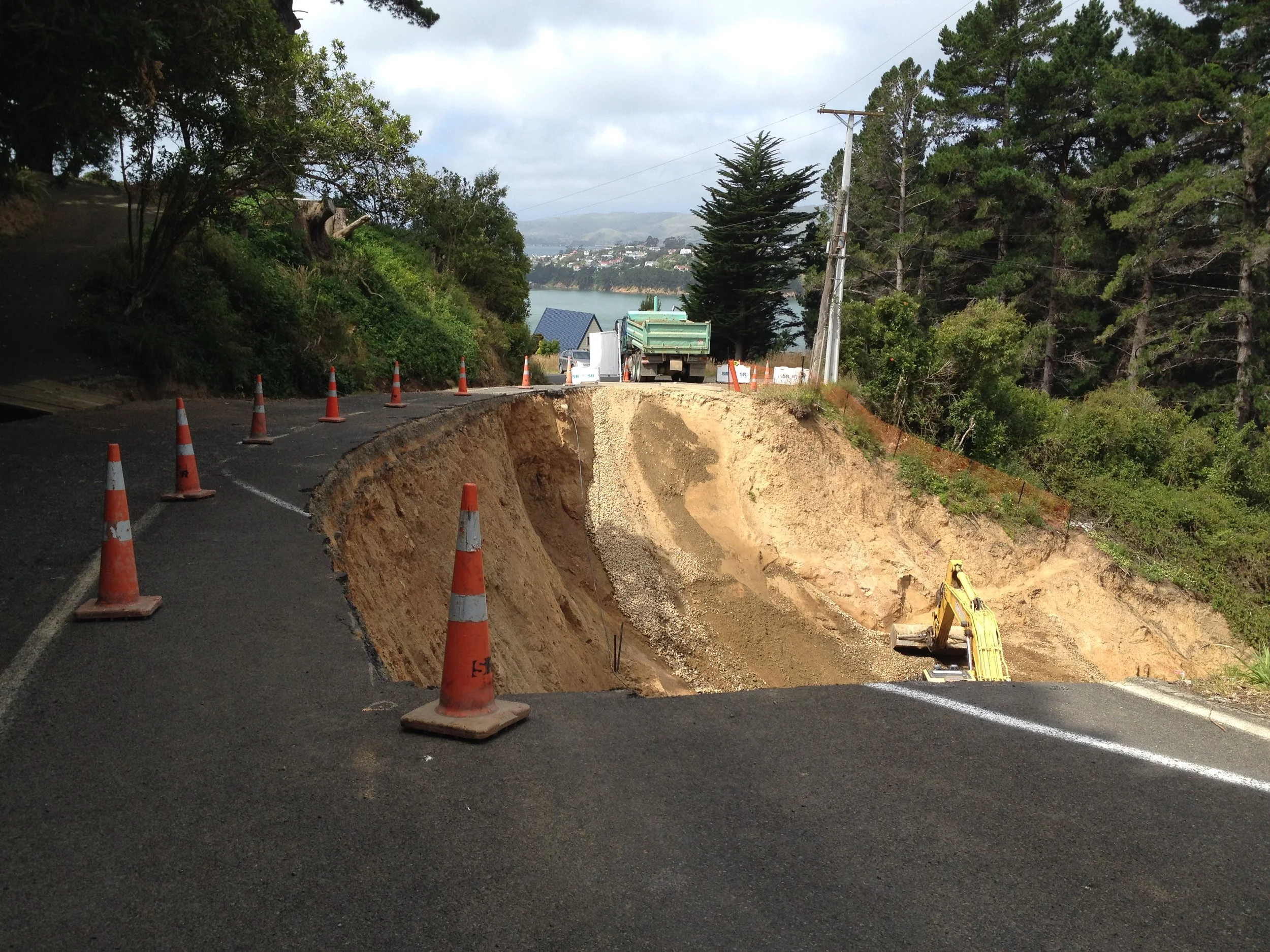
Landslides in urban areas can impact infrastructure. Image: LEARNZ.
Many landslides happen in areas where very few people live, which reduces the impact. Landslides in cities pose a much greater risk to people, so it is important to identify at-risk areas.
Some areas at a higher risk of landslides include:
areas with existing old landslides.
steep slopes
drainage channels on steep slopes
stream and riverbanks
coastal cliffs.
“Kia whakatōmuri te haere whakamua”
I walk backwards into the future with my eyes fixed on my past.
This whakataukī (Māori proverb) is a reminder to look to the past to better plan for the future. If landslides have been a problem in the past, they are likely to remain a problem in the future.
Reducing the risk
The best option is not to build or develop on unstable or high-risk sites. Councils have maps identifying areas at risk of landslides, and any new development is approved only after experts have been on site to assess the ground's strength and the surrounding slopes.
Experts also take into account earthquake and flood risk as both can trigger landslides.
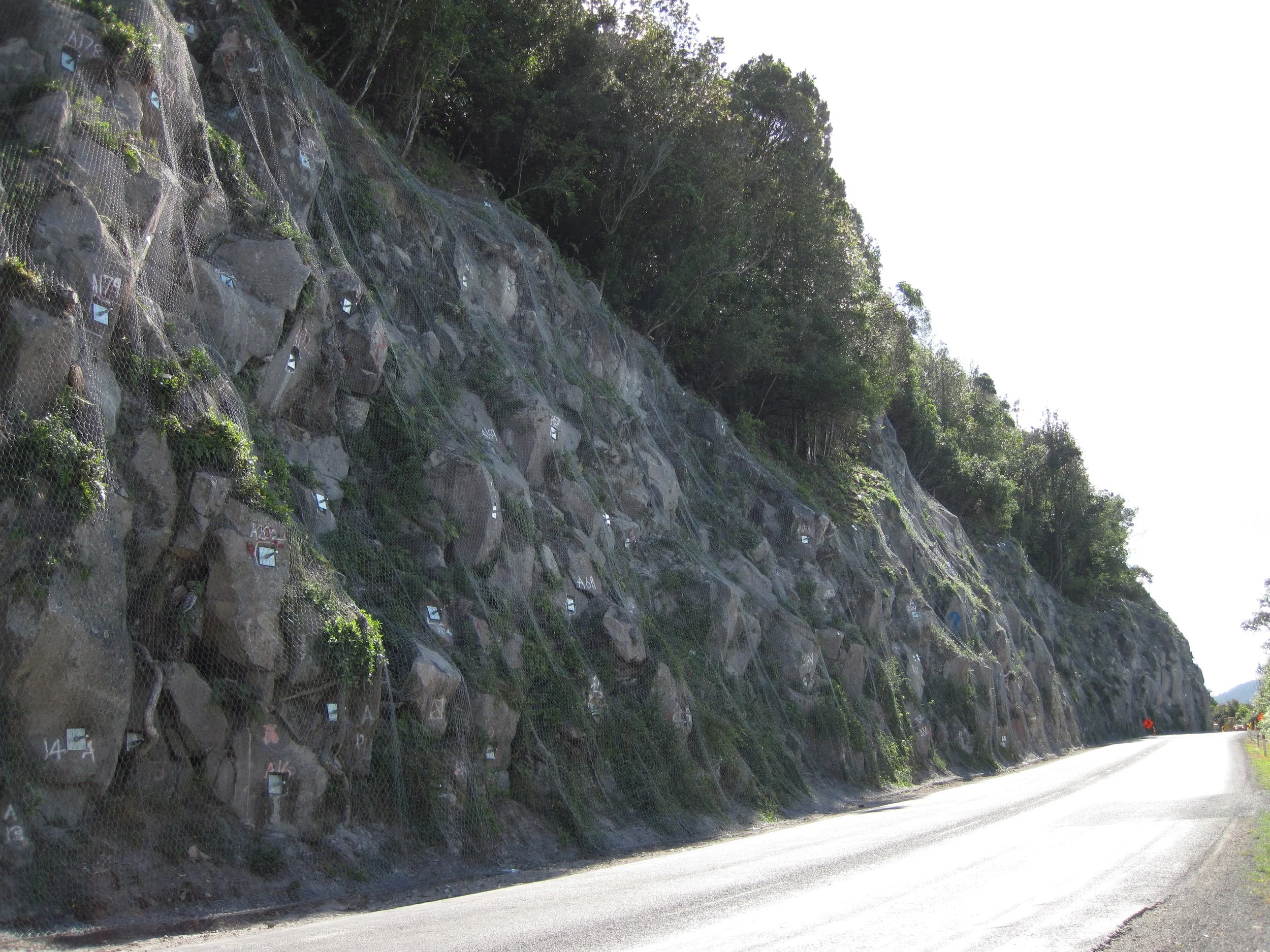
Some methods to reduce the risk of landslides include:
drainage to remove excess water which can increase or trigger land movement
strengthening of building foundations
building retaining walls
building stop banks and flood protection
building structures/fences to capture rockfall
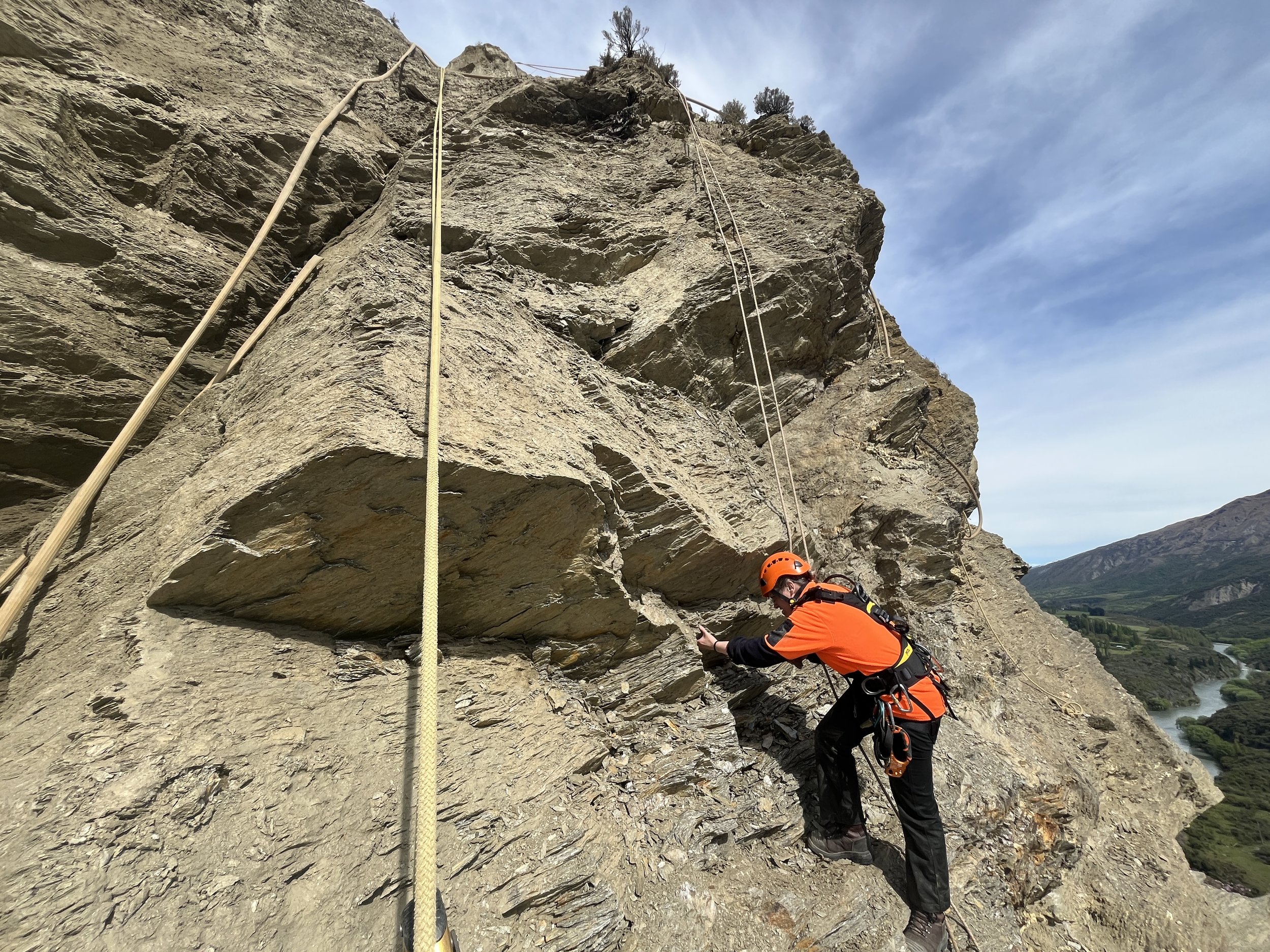
removing loose rock from cliffs above roads, buildings or other infrastructure
maintaining planted areas or planting trees to stabilise slopes.
Monitoring and modelling landslides
GeoNet is a nationwide network of instruments and computer programmes used to monitor geohazards across Aotearoa. GeoNet detects, analyses and responds to earthquakes, volcanic activity, large landslides, tsunami and the slow movement that can happen before large earthquakes. Check the GeoNet site to find out about recent events.
Survey equipment and GPS sensors can be used to measure movement, and modelling landslides can help identify areas at risk, so better decisions are made about land use.
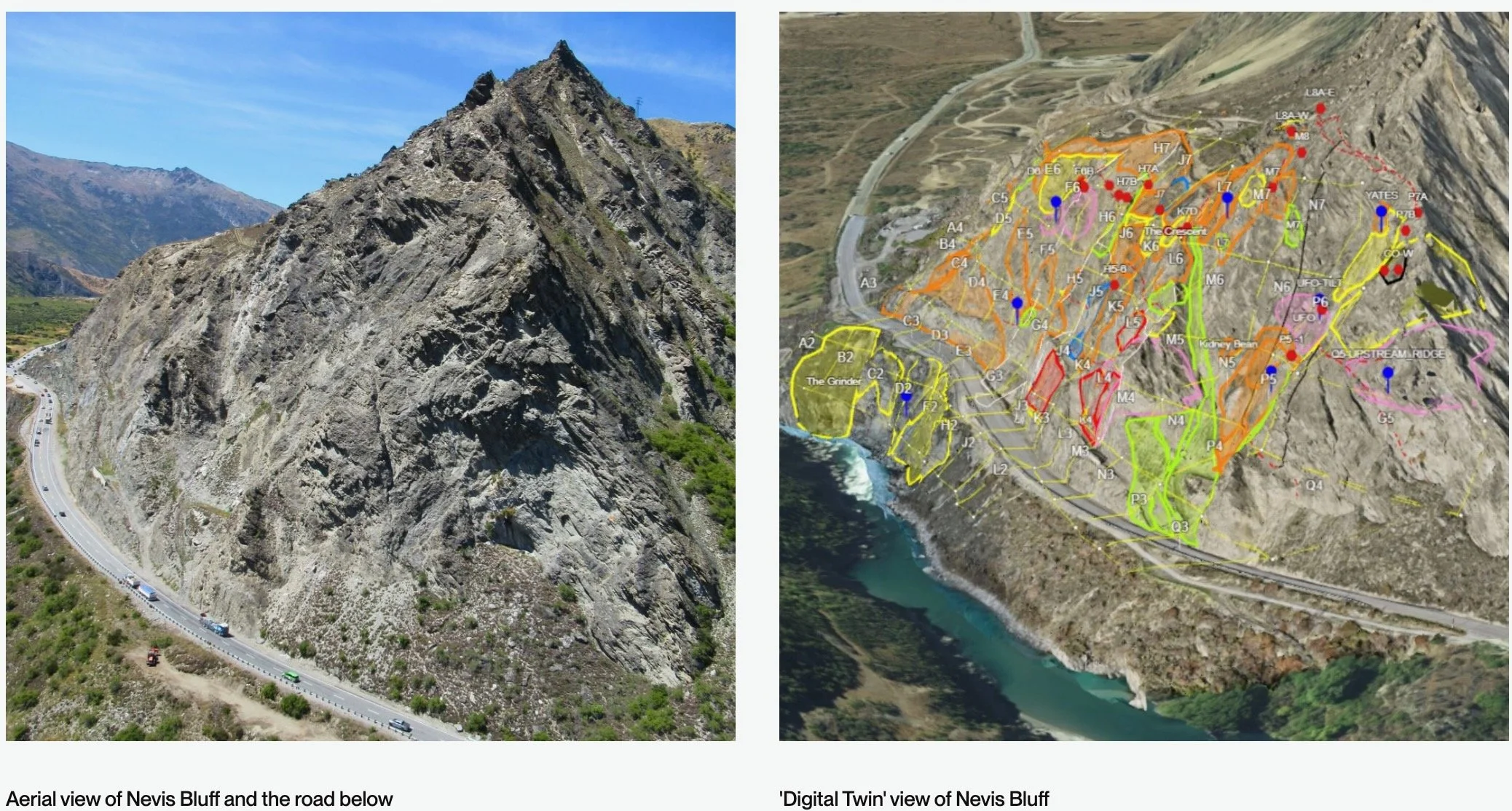
3D modelling
People travelling beneath Nevis Bluff on State Highway 6 between Tīrau | Cromwell and Tahuna ❘ Queenstown may not realise it, but a digital replica of the towering cliff above the road is now being used to help manage the risk of rockfall.
Developed by experts from the global engineering company WSP, the ‘digital twin’ is an accurate 3D model of Nevis Bluff built from thousands of drone photos processed with specialised software that turned them into a lifelike 3D model. A network of remote sensors is installed on Nevis Bluff. The sensors send movement data every five minutes, which can be viewed through the digital twin or on a mobile phone. Mobile phone alerts are triggered if there is significant movement. This technology allows experts to see what’s happening in real time, plan work, and help keep road users safe.
What can you do
Be aware that landslides on another property could affect you – for example, if you are in the path of a landslide runout.
Find out from your council if they have information on landslide hazard and risk, if there have been landslides in your area before, and where they might occur again.
If you live on a slope, check that the drains are clear and adequate and that the retaining walls are in good condition.