New Zealand’s first organised civil defence was started by fears of air raids and poison-gas attacks during the Second World War – and fears of nuclear attack in the 1950s. In the 2000s natural disasters such as floods, landslides and earthquakes were the focus of civil-defence and emergency management (CDEM).
New Zealand’s first organised civil defence was started by fears of air raids and poison-gas attacks during the Second World War. In the 2000s natural disasters such as floods, landslides and earthquakes were the focus of civil-defence and emergency management (CDEM).
History of civil defence
Early New Zealand communities had to fend for themselves in emergencies. Organised civil defence had its origins in the Emergency Precautions Scheme, set up to deal with possible air raids and poison-gas attacks during the Second World War.
In the 1950s and early 1960s people worried about nuclear attack. A law was passed allowing local authorities to organise rescue and welfare services, and the Ministry of Civil Defence was set up in 1959. Later it became clear that natural hazards such as floods and earthquakes were more of a danger.
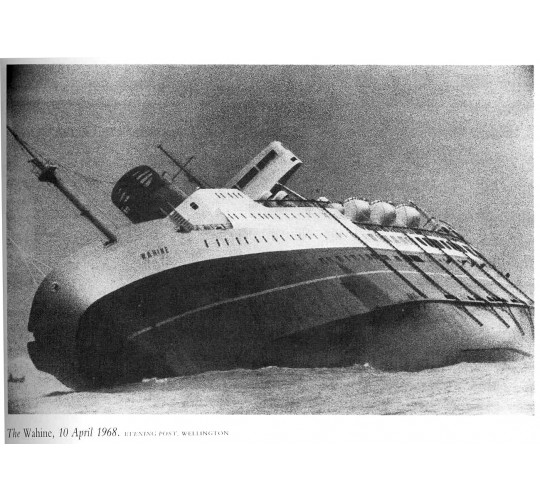
Civil-defence plans for local authorities were made compulsory after the severe storm that sank the Wahine ferry in 1968. Committees to co-ordinate emergency services were set up after a 1973 incident when Auckland residents were affected by toxic fumes from leaking storage drums. From 1983 disaster recovery co-ordinators managed remedial work after disasters, which included major floods, the 1987 Bay of Plenty earthquake and Cyclone Bola in 1988. The Ministry of Civil Defence and Emergency Management was set up in 1999.
Civil defence in the 2000s
From 2002 regional CDEM groups were set up, along with emergency and welfare services and necessary utilities such as power companies. Each group had to write a plan taking into account the region’s particular disaster risks. The plans aim to reduce risks and manage recovery, and to prepare for and deal with emergencies.
In 2011 a new web-based computer system was developed to link the National Crisis Management Centre with regional CDEM groups, allowing them to share information in an emergency. It also enabled other emergency services, such as police, to access information as required.
Being prepared
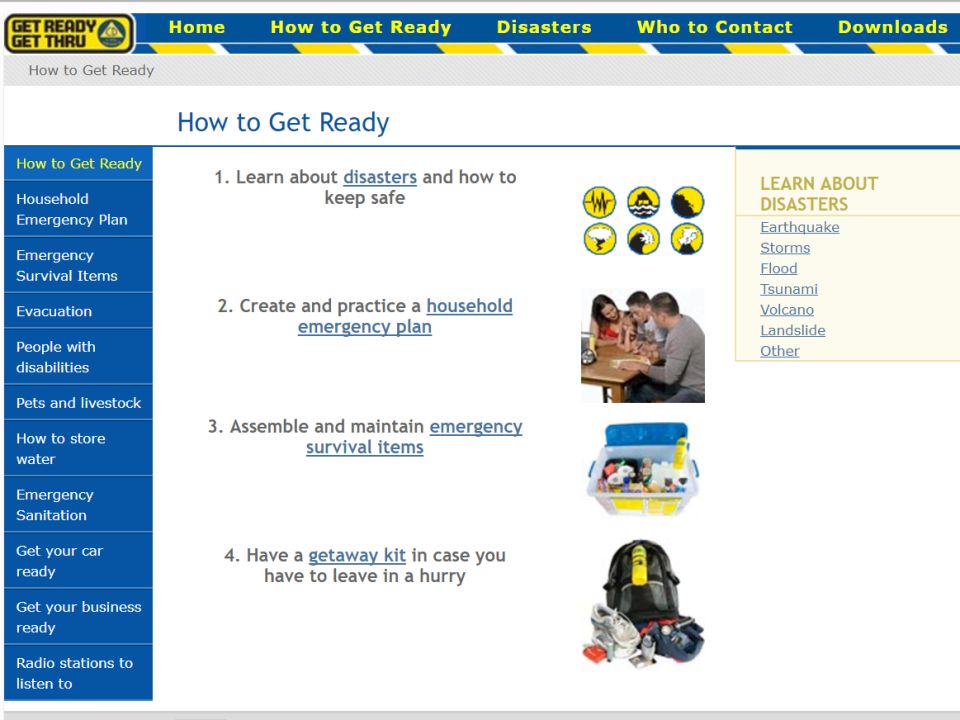
Civil defence has always placed importance on individual and community self-reliance. Getting people to prepare for an emergency can be difficult. Many prefer not to think about something that ‘might never happen’. But when disasters happen elsewhere people are often shocked into action, such as filling water bottles and gathering emergency items at home and work, and making a plan of action with family members.
Details on how to prepare for and behave in an emergency can be found on the national and regional civil-defence websites, and in regular newspaper and television advertisements. Many CDEM regions have a texting (SMS) alert system for disasters which people can join, and the Civil Defence website provides RSS and Twitter feeds.
Community civil defence
In an emergency, people may go to a community civil-defence centre. These are based in schools, community centres or marae, and are run by volunteers. Community civil-defence centres are an important part of the civil-defence system, as they may be the first places that people will go to if they have to evacuate their homes.
History of civil defence
Early New Zealand communities had to fend for themselves in emergencies. Organised civil defence was set up to deal with possible air raids and poison-gas attacks during the Second World War.
In the 1950s and early 1960s people worried about nuclear attack. The Ministry of Civil Defence was set up in 1959. Later it became clear that natural hazards such as floods and earthquakes were more of a danger.
Local authorities needed Civil-defence plans after the severe storm that sank the Wahine ferry in 1968. Committees to organise emergency services were set up after Auckland residents were affected by toxic fumes in 1973.
From 1983 disaster recovery co-ordinators managed remedial work after major floods, the 1987 Bay of Plenty earthquake and Cyclone Bola in 1988. The Ministry of Civil Defence and Emergency Management was set up in 1999.
Civil defence in the 2000s
From 2002 regional CDEM groups were set up. Each group had to write a plan that looked at the region’s disaster risks. The plans aim to:
- reduce risks
- manage recovery
- prepare for and deal with emergencies.
In 2011 a new web-based computer system was set up to link the National Crisis Management Centre with regional CDEM groups. This allows them to share information in an emergency. It also helps other emergency services such as police to obtain information as needed.
Being prepared
Getting people to prepare for an emergency can sometimes be difficult. But when disasters happen elsewhere people are often shocked into action, such as filling water bottles and making a plan of action with family members.
Details on how to prepare for and act in an emergency can be found:
- on the national and regional civil-defence websites
- in regular newspaper and television advertisements.
Many CDEM regions have a texting (SMS) alert system for disasters which people can join, and the Civil Defence website provides RSS and Twitter feeds.
Community civil defence
In an emergency, people may go to a community civil-defence centre. These are in schools, community centres or marae, and are run by volunteers. Community civil-defence centres are important. They may be the first places people go to if they have to evacuate their homes.
Cook Islands Maori keywords:
| Te Opati |
Ministry of Civil Defence and Emergency Management |
| kino natura |
natural disaster |
| ‘ākonokono / ‘akapapapa / teatea momō |
to prepare |
| matakeinanga / hiti tangata |
community |
Go to the Civil Defence website to find where your local community civil-defence centre is.
Go to the Civil Defence website to find where your local community civil-defence centre is.